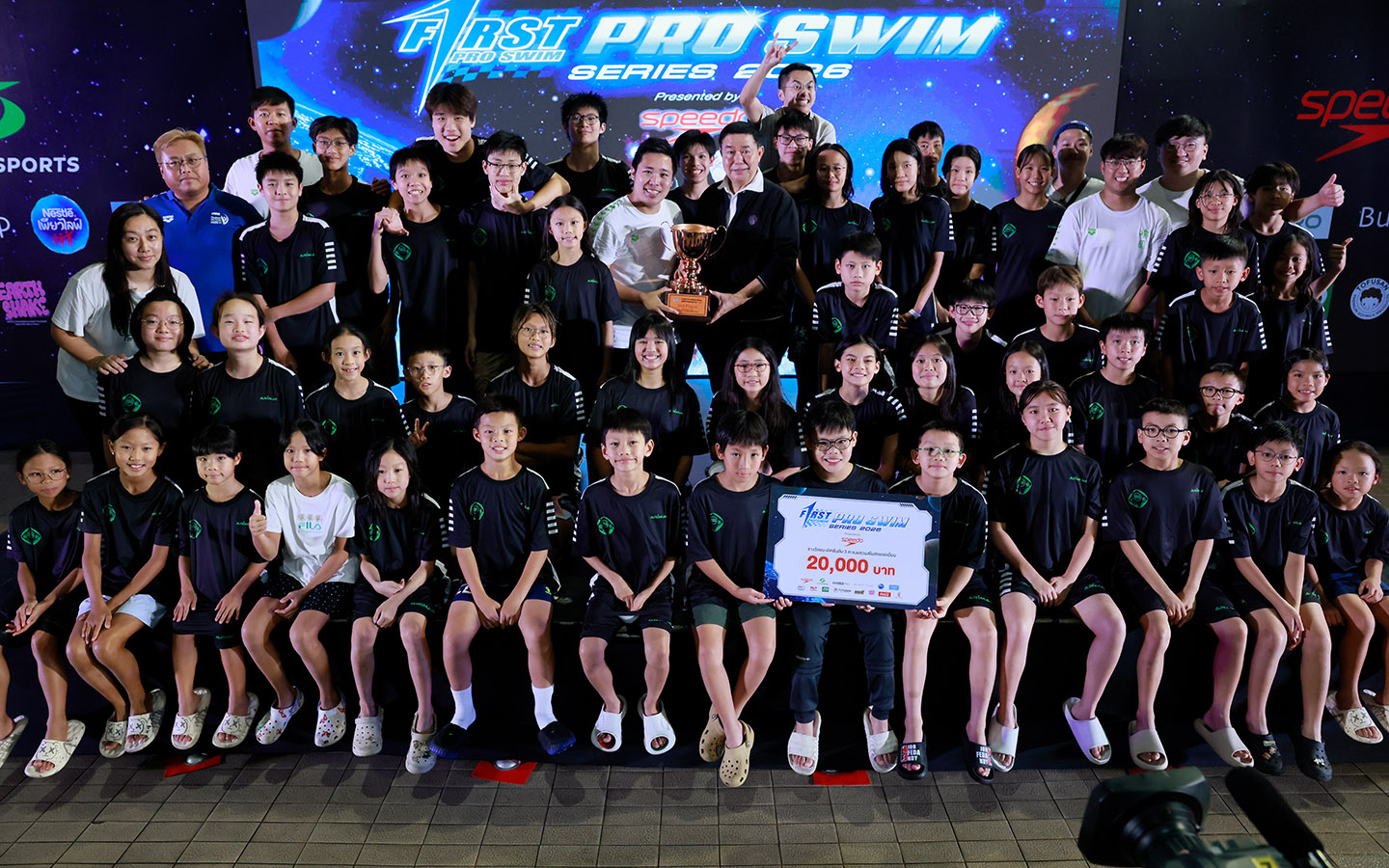
Team — 1st Place
50,000 THB

Coach Noey set out to make competitive swimming feel like a real final — every time. In its second year, the F1RST Pro Swim Series is building a case that Thailand’s swim meets don’t have to look the way they always have.
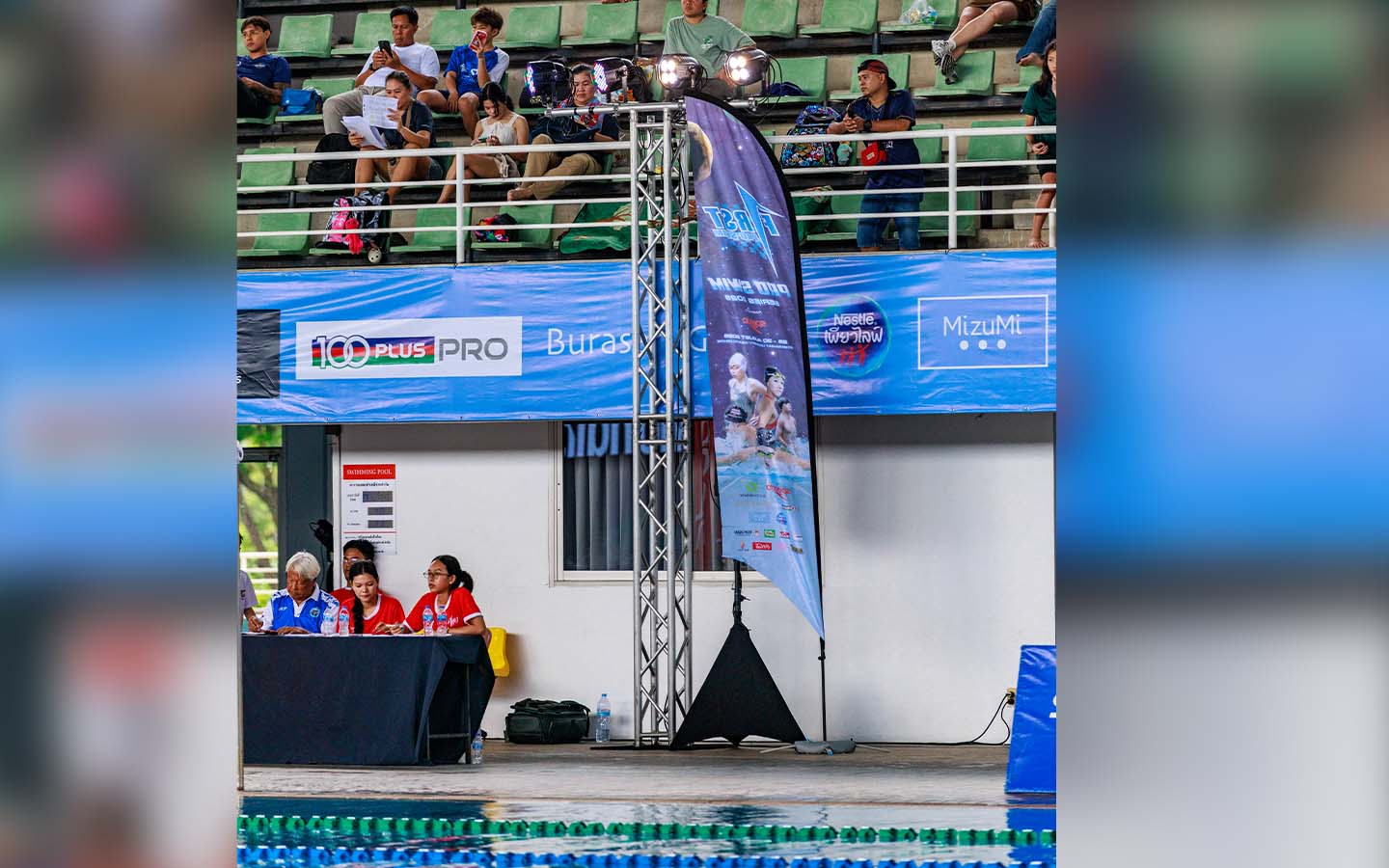
Most swim meets feel like swim meets. The F1RST Pro Swim Series was designed not to. From the LED spotlights over the Superfinals lanes to the prize money sitting on the results board, every element of the event was built with a single question in mind: what would make a young swimmer remember this race for the rest of their life?
The answer, according to Coach Noey — the driving force behind the series — starts with atmosphere. “The main idea was to make swimming more exciting and turn it into more of a sports entertainment event, while giving athletes an experience they don’t normally get in Thailand,” she said. “I believe very few young swimmers, or even our national team swimmers, get to experience a real final atmosphere like this. We wanted them to feel that racing in a final is something special.”
The Superfinals format — reserved for the 50m events — sits at the heart of what separates the F1RST Pro Swim Series from a standard competition. It borrows from the logic of track and field finals: the fastest qualifiers return under a different kind of pressure, a different kind of light, a different kind of noise. The race that follows is the same distance. Everything around it is not.
“We wanted younger swimmers to see and race alongside our national team and international-level athletes.” — Coach Noey, F1RST Swim Team
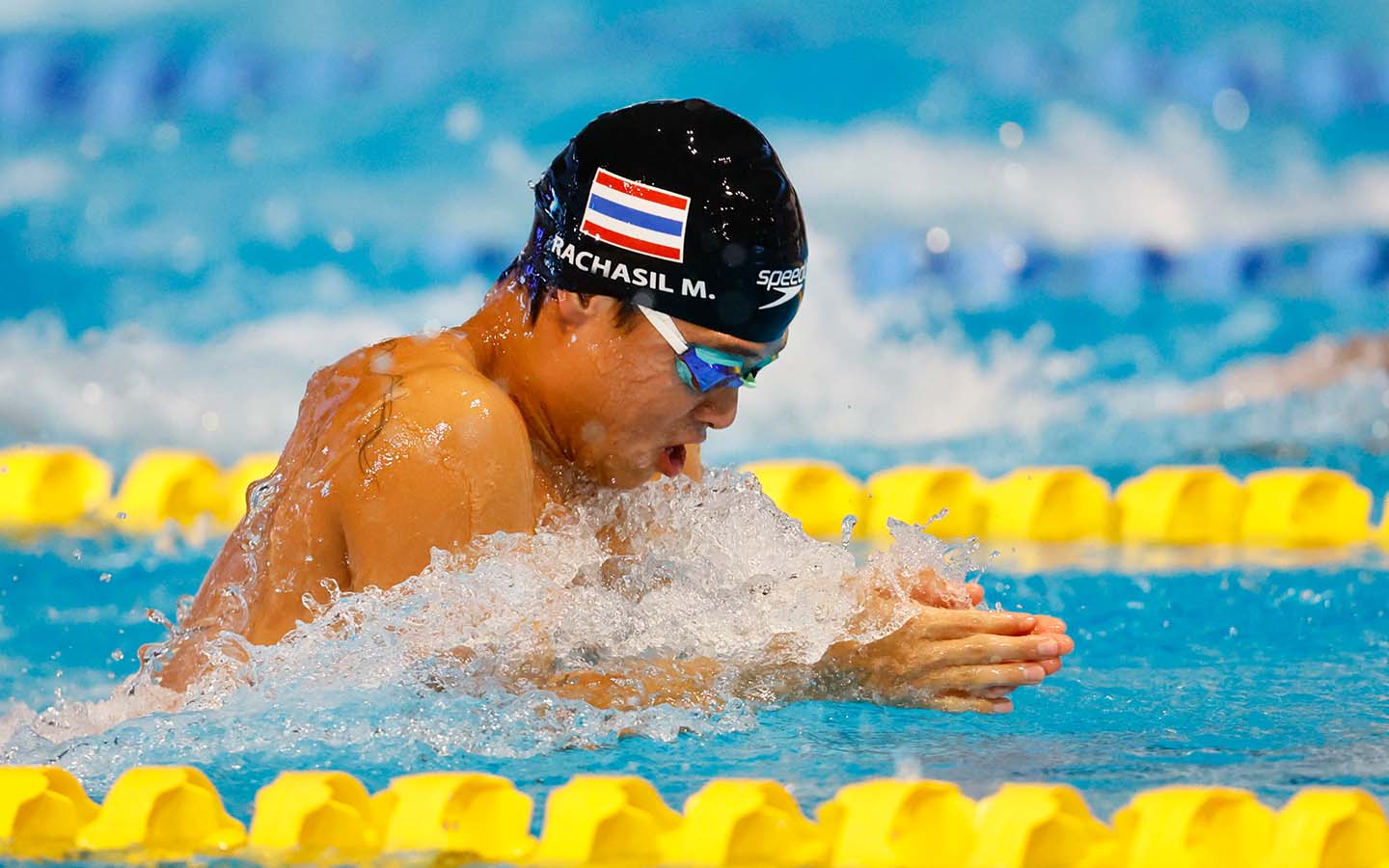
The field was constructed with that in mind. The start list featured several SEA Games athletes and top swimmers from across Thailand — and their presence wasn’t incidental. It was the point. “Having our national team and international-level swimmers here gives the younger athletes someone to look up to and shows them what they can work towards,” Coach Noey said. “I think having these incentives helped attract more clubs, especially the clubs of our national team swimmers, to come and compete. It creates a stronger field and, at the same time, gives younger swimmers the opportunity to race alongside some of the best swimmers in Thailand.”
The field also drew international clubs making the journey to Thammasat specifically for this meet. HVA Swim Team — a Hong Kong club — arrived with 50 athletes spanning every age group, from seven-year-olds in their first international environment to senior swimmers in their late teens. Korean swimmers from Hwaseong Special City made the trip too. That kind of international pull is not something a domestic Thai swim meet typically generates, and it changed the texture of the competition: younger Thai swimmers were sharing warm-up lanes and racing heat-on-heat against clubs from across the region.

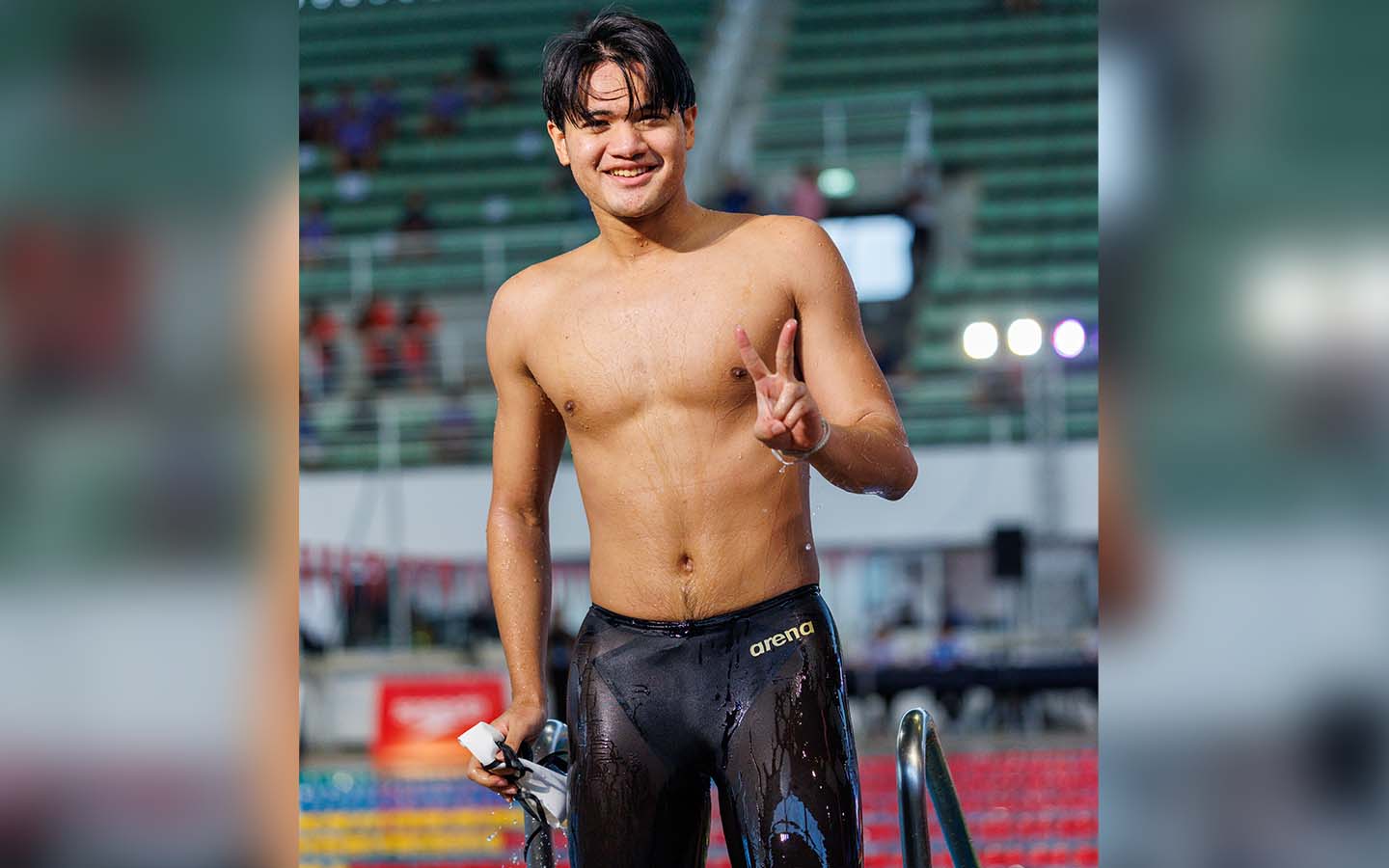
The LED spotlights — trained on the ladders as each swimmer climbed out of the pool — raised the obvious question: were they there for the swimmers, the cameras, or both? “Yes, definitely,” Coach Noey said. “We wanted every single swimmer to feel like they were stepping into a different atmosphere when they finished their race.” The answer is all three — and the production company the team brought in to execute it understood the assignment. “They really helped us bring the vision to life. We also thought about the photographers and media, so I’m really happy to hear that it helped get some good shots.”
The production side of the meet — music, lighting, broadcast coordination — was, by her own account, genuinely difficult to pull off. “There are a lot of things happening behind the scenes that people don’t see. We wanted this to feel more like a sports entertainment event rather than just a swimming meet, so we put a lot of effort into the production, music, lighting and media. And yes, it costs quite a lot.” The cost is why sponsors matter — not just for their financial value, but for what their presence signals. “Having strong brands associated with the event really helps elevate the whole experience.”
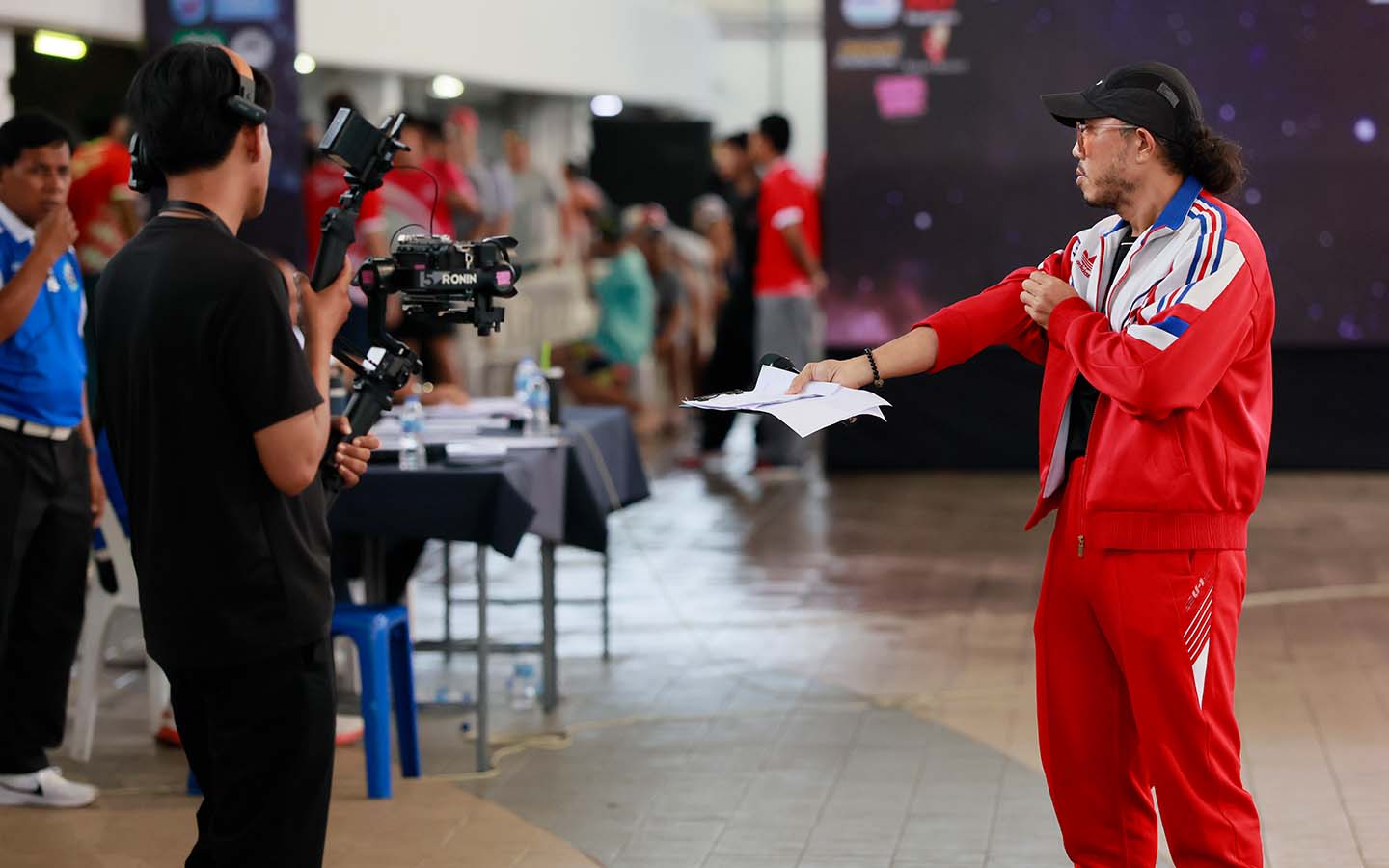
Prize money was introduced to make the competition attractive to stronger clubs — and to give the meet a weight that time standards alone can’t provide. The structure spans team performance and individual achievement.
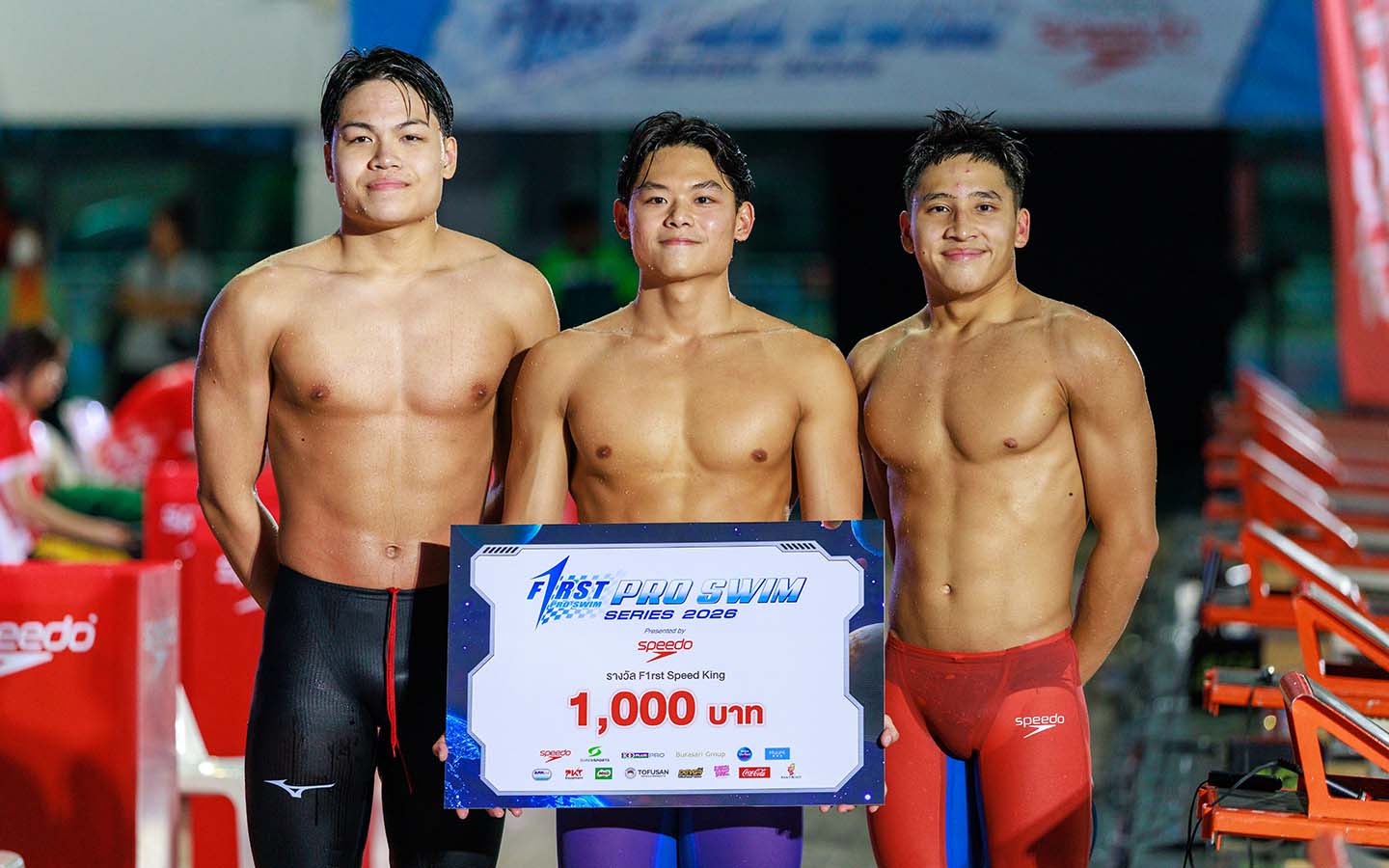
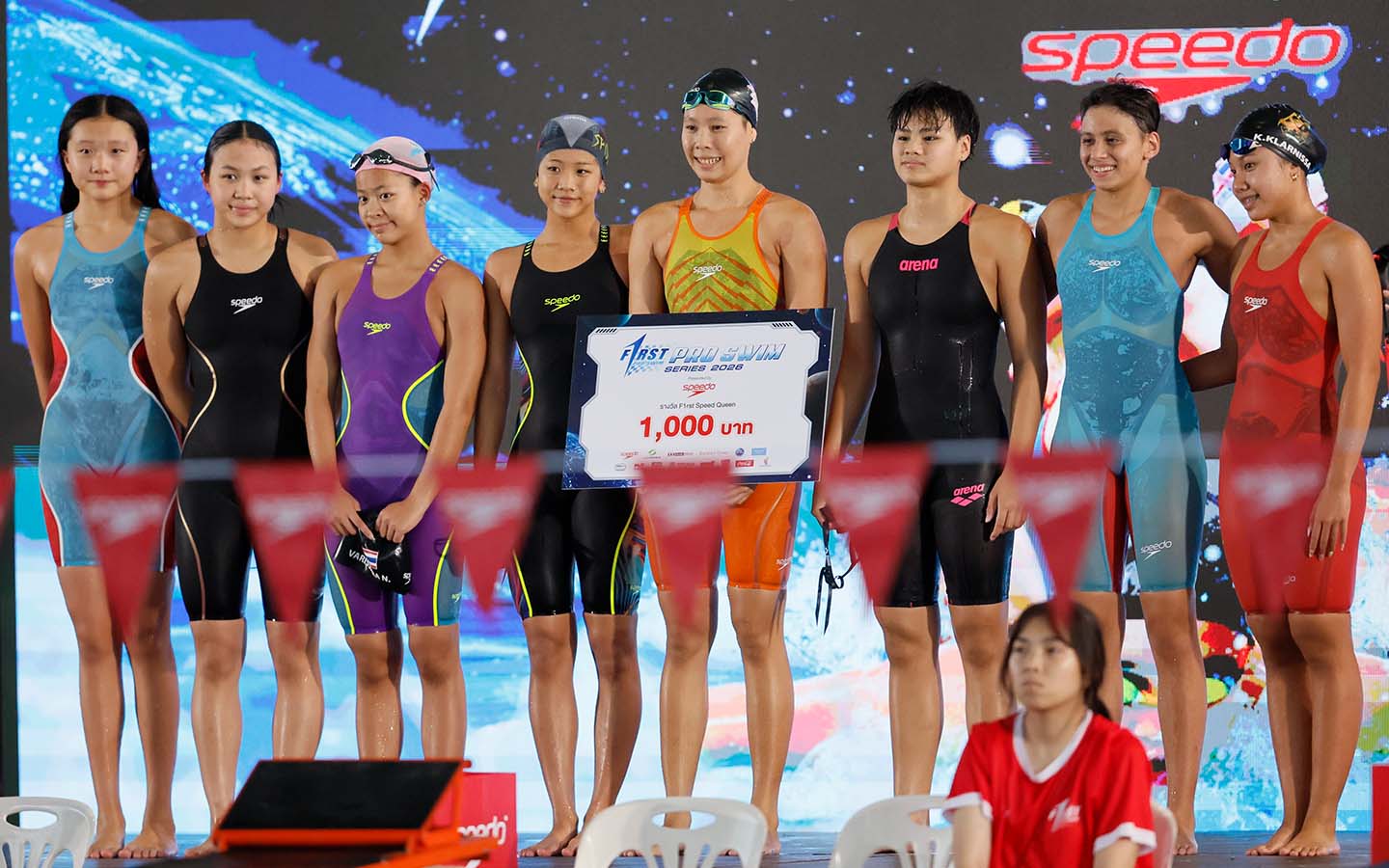
The logic behind the team prize is straightforward: incentivise clubs to send their best across multiple events, not just their headline swimmers. A meet with stronger fields is a better meet for everyone in it.
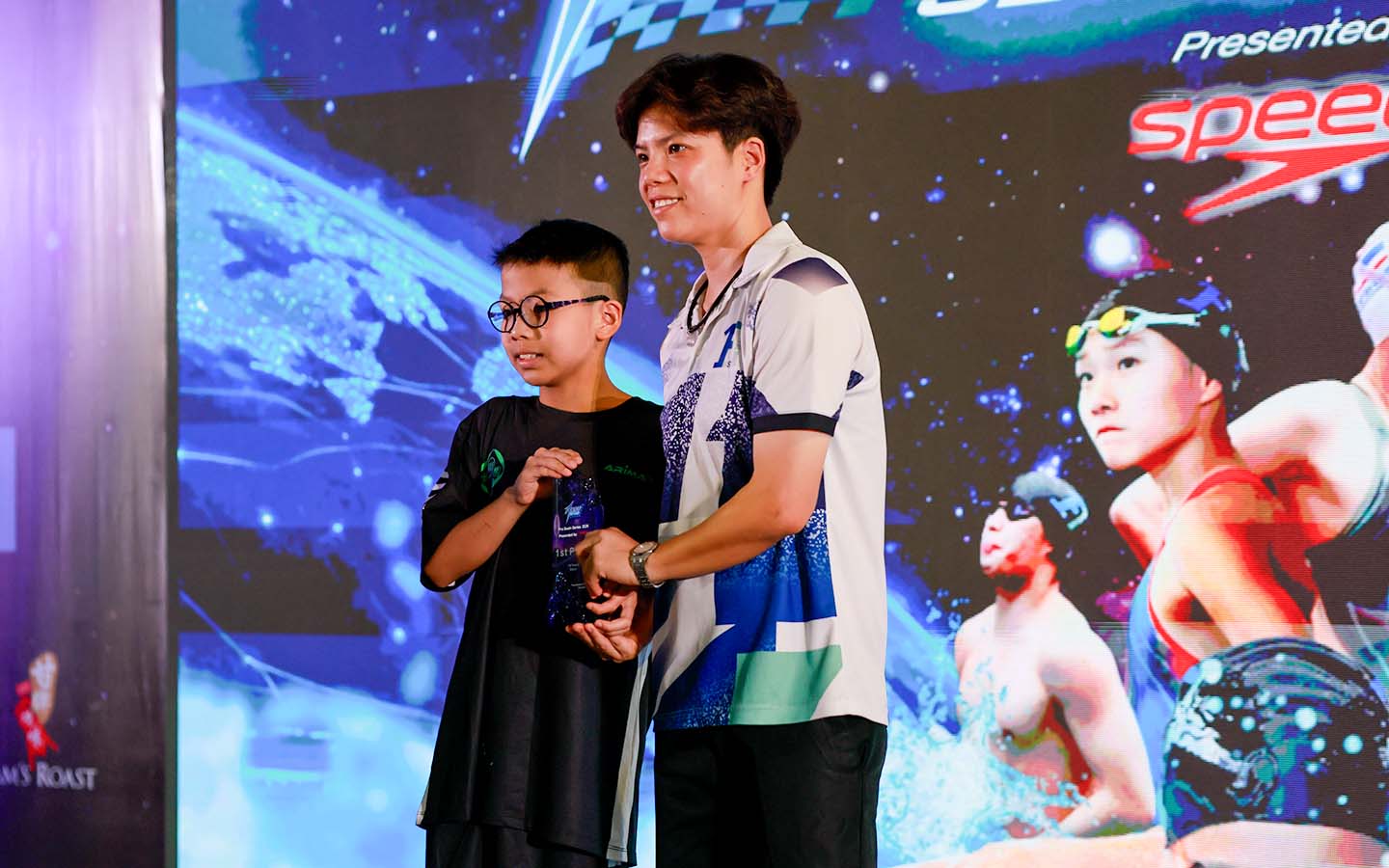
The question of who makes this happen gets a deliberate answer. “It’s a big team effort, but the main driving force is our F1RST Swim Team.” The list that follows — the organising team, coaches, officials, production team, volunteers, sponsors, parents, and athletes — is not a formality. “Everyone played a part. I may have the vision, but there is no way I could make this happen alone.”
“I may have the vision, but there is no way I could make this happen alone.” — Coach Noey
On sponsors: the meet received very little financial support in cash. Most of the brand involvement came in the form of products for athletes. “But we really wanted to bring strong brands into the event because their presence and branding help the competition feel bigger and more professional.” That distinction — between funding and legitimacy — matters when you’re building something from scratch.
The first year was about proving the concept. The second was about making it bigger and better. The third is already being thought about in terms that go beyond Thailand’s borders. “Our goal is to keep raising the standard of swimming competitions in Thailand and eventually across Southeast Asia,” Coach Noey said.
World Aquatics sanctioning is on the long-term roadmap. “Not this year. Right now, we’re focusing on building the identity of the F1RST Pro Swim Series and making the event better every year. But yes, World Aquatics sanctioning is definitely something we’d like to explore in the future as the series grows.” The sequencing is deliberate — build the identity first, then pursue the credential.
For now, the series returns. The Superfinals lights will come back on. And somewhere in the heat sheets, there will be a young swimmer who has never stood under lights like that — and who won’t forget what it felt like when they did.