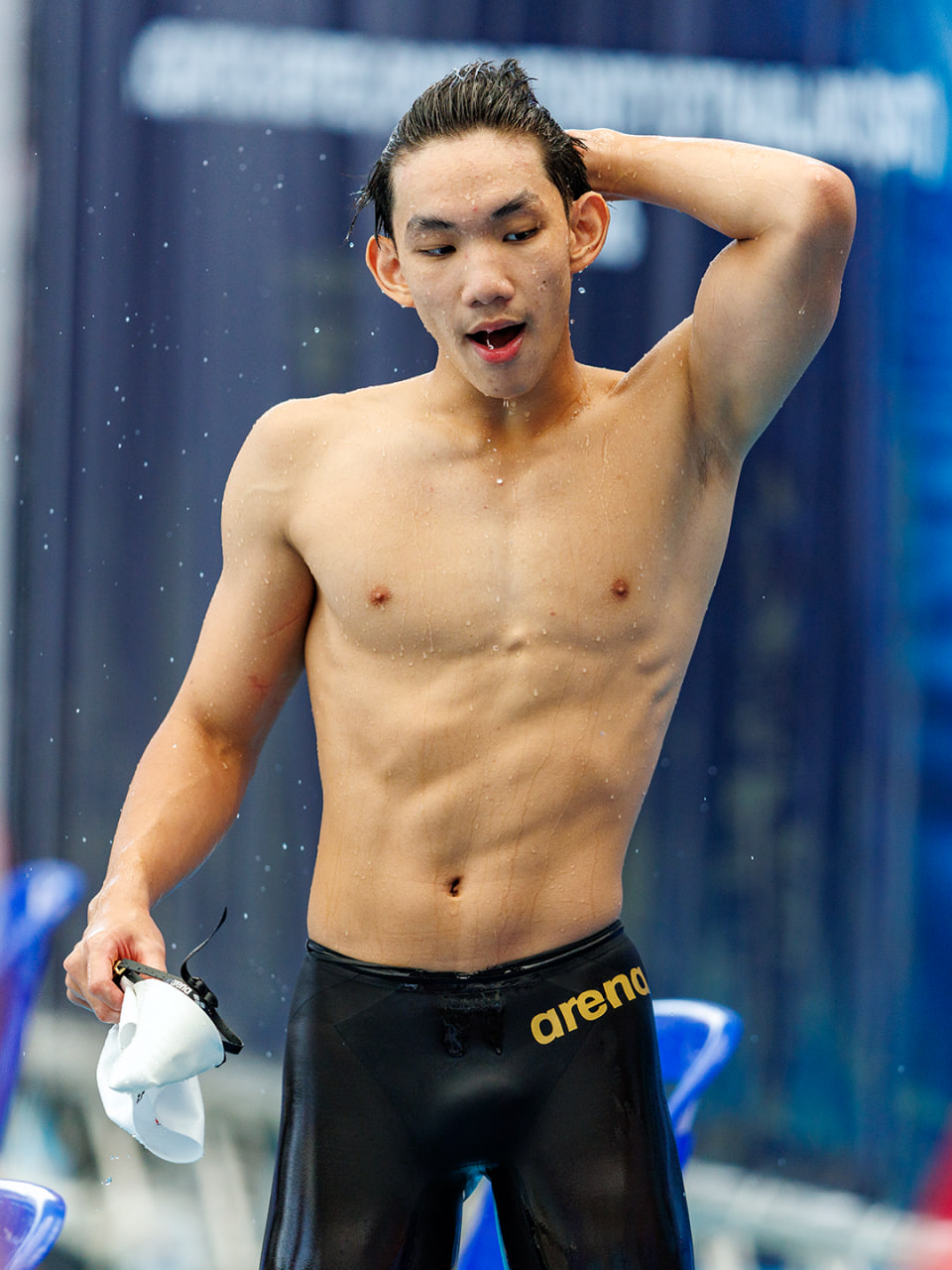
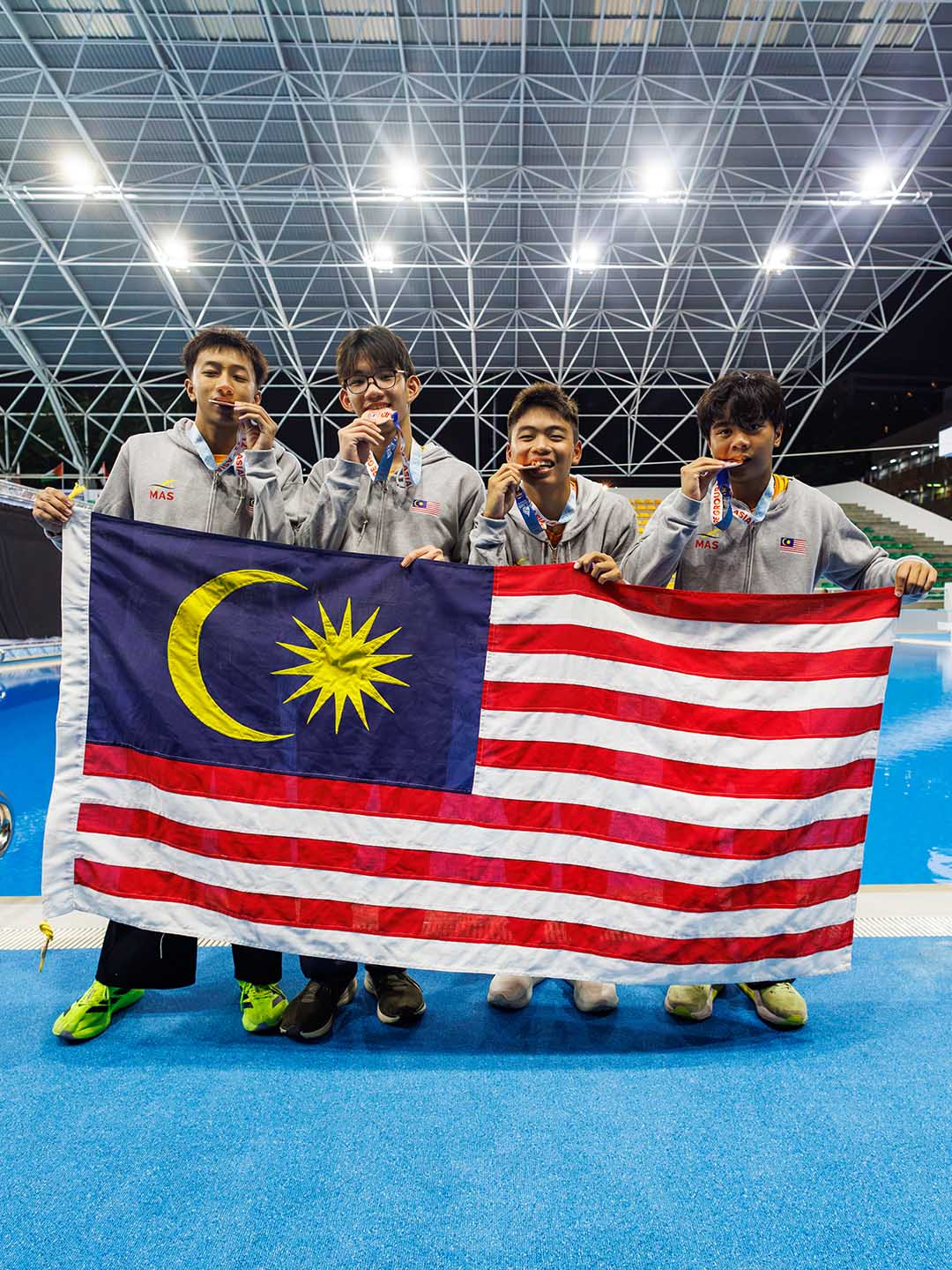
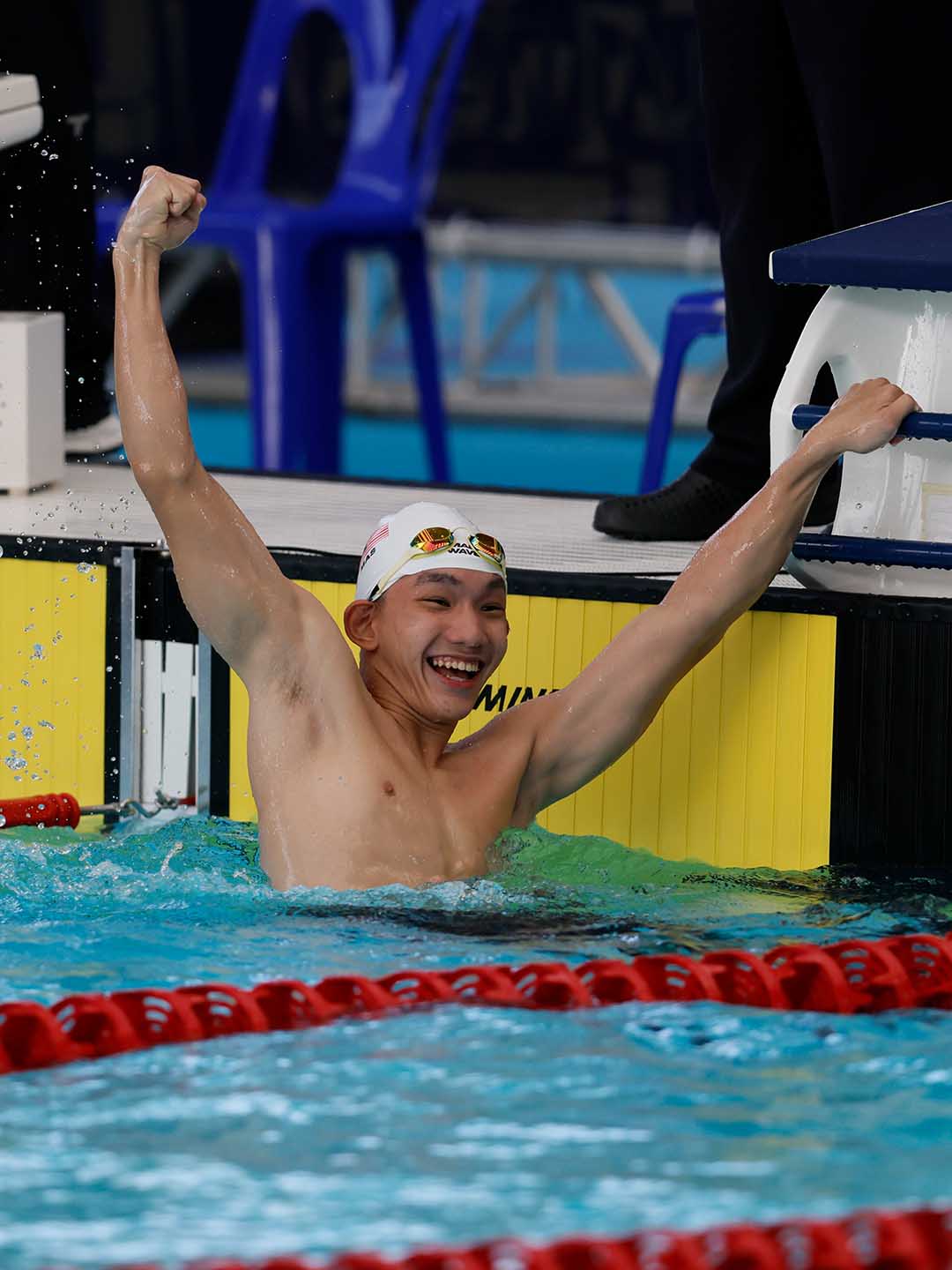
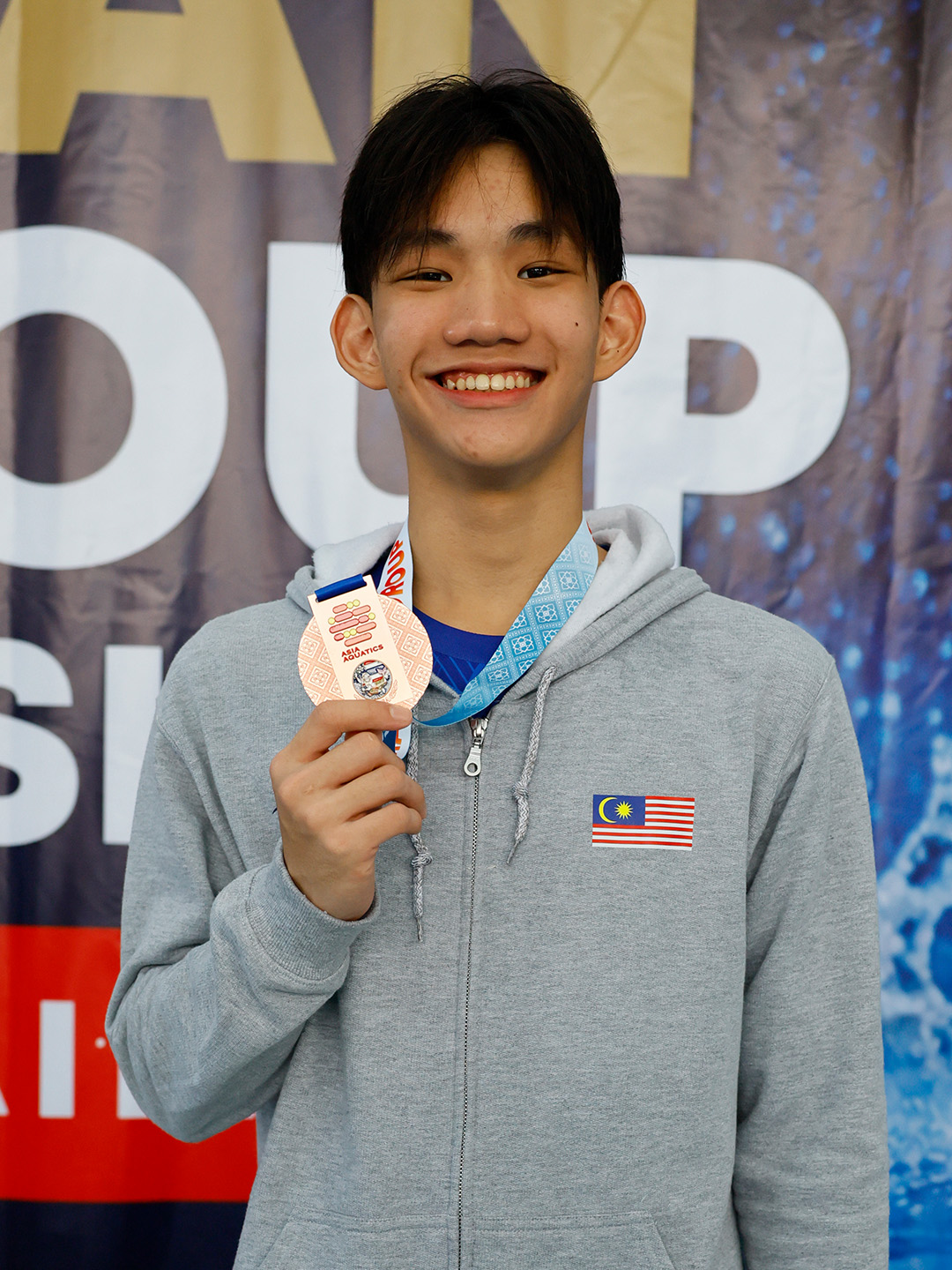
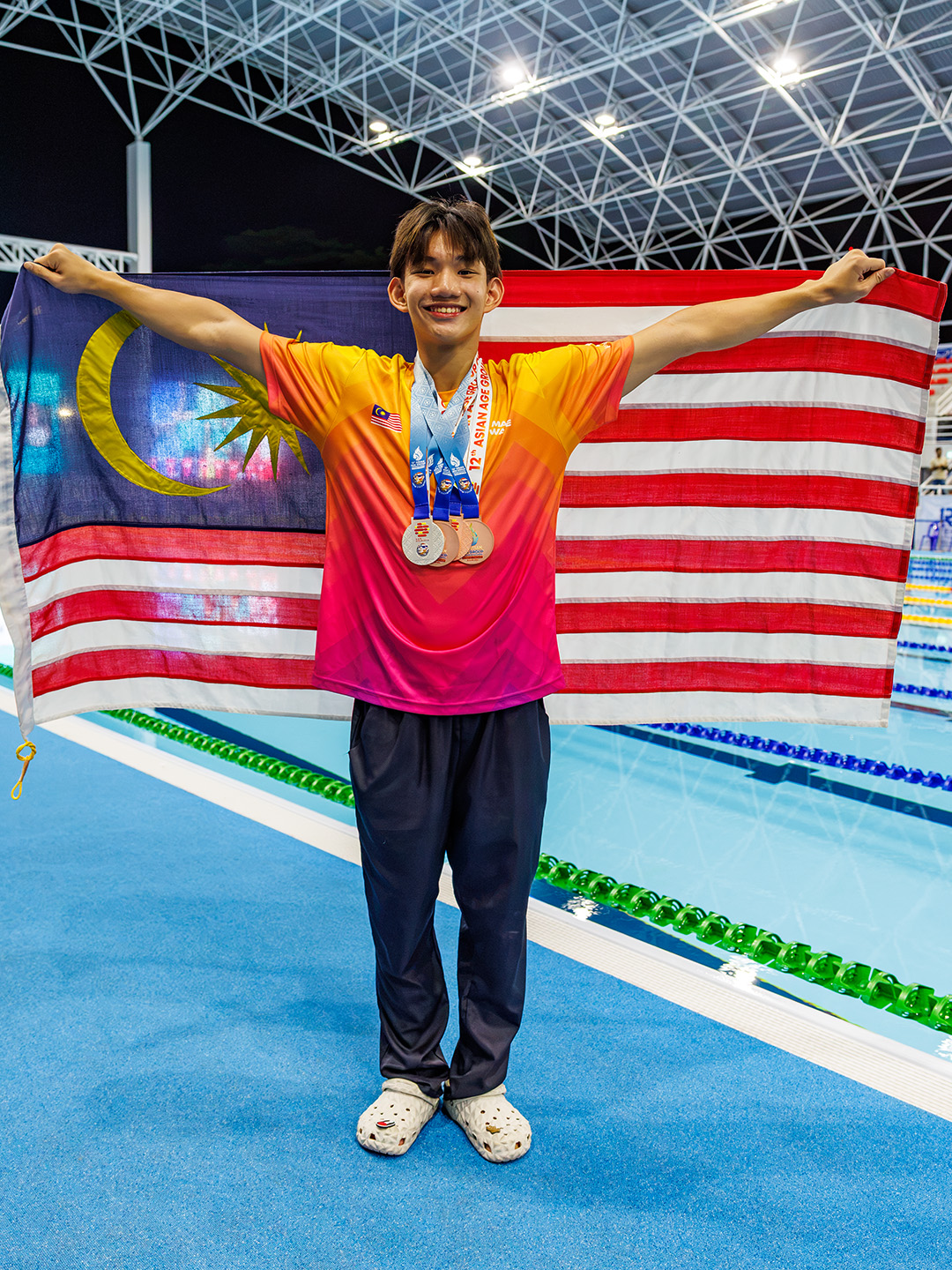
Four medals in four days. That's the headline from Koo Shyann's 12th Asian Age Group Championships — a silver and three bronzes that made him one of the first swimmers from Perak to medal at an international meet. But the number alone undersells how it happened: a relay swum on nerves, a stroke he'd never trained learned thirty minutes before a final, a comeback nobody saw coming, and a last-day bronze pulled out of a lane he never expected to be racing from.
Atlas Poolside sat down with Koo Shyann after the meet to walk through all four medals, day by day, in his own words.
Day 1 — A Relay Under Pressure
3RD4x100m Freestyle Relay
The meet opened with the pressure already on. Koo Shyann led off the men's 4x100m freestyle relay — the first swimmer in the water, with nothing yet on the board and three teammates waiting to follow.
“During the first day the 4x100 free relay, before the event I was really stressed and uncertain if I would perform my best during the relay, and wouldn't even dare think about it if we got the medal,” he says. “And when it was my turn to swim, I felt like I let everyone down since I was the first leg and couldn't get us into a good position — deproved by 0.2 seconds.”
That margin — two-tenths of a second — sat with him through the rest of the race. But after the final leg touched the wall, the scoreboard read third. “After the last leg, and when we got third, I was overjoyed and very happy for being able to get the first medal for Malaysia,” he says. A shaky start had turned into the meet's opening medal.
Day 2 — A Stroke He Learned That Morning
3RD50m Butterfly
If Day 1 was about managing pressure, Day 2 was the opposite — a swim with none at all. Koo Shyann isn't a butterfly specialist, and he went into the 50m fly prelims almost as an experiment.
“The second day for the 50 fly was completely unexpected. I went to the prelims swim without a single care or stress, going there to just test out a new swim style I'd just learnt 30 minutes ago before my swim, and I somehow got into finals,” he says. “I improved from my old PB by 0.7 seconds, which was a miracle.”
Making the final on a stroke he'd barely rehearsed was already a surprise. The final itself nearly went sideways early. “During the finals swim I messed up my dive and underwater, which broke my rhythm and made me a bit anxious, but then after the first 20 metres I got my rhythm back and was able to calm down and focus on chasing the Thailand guy beside me — and win bronze.”
“I was very happy I got this bronze because I have never actually trained my fly in training, so I never even thought I would get to finals, and being able to get a medal was just something I thought was impossible until I did it.”
Day 4 — Seeded First, Chasing From Last
2ND100m Breaststroke
The 100m breaststroke was supposed to be a modest result — a fourth-place finish, at best, in an event Koo Shyann had trained on but hadn't built up as a headline swim. “The fourth day the 100 breast was an event I trained on for a bit and was not expecting a medal, and was expecting to end up 4th,” he says.
Then the seedings flipped the script. “During the prelims I was really stressed out and swam not as good, but then got seeded first because Kitipoom swam easy and the Japanese guy got sick — unfortunate for him, but fortunate for me.” Suddenly the swimmer expecting fourth was going into the final with the fastest seed time on the sheet, and all the pressure that comes with it.
“Before the finals I was overthinking my race and thought about what if I let everyone down and not even get a medal after being seeded first, and during the swim my first 50 was behind everyone. I thought that this was the end and I couldn't chase back.”
Then, at the 75-metre mark, something shifted. “I saw their stroke rate start to drop, so I thought to myself, eh, their stroke rate is slowing down, so they're also going to be slow — that means if I go fast I can beat them. So I just got a dopamine rush and started sprinting, trying to chase Kitipoom.”
He didn't catch his training partner — but he didn't need to. “I couldn't chase him, but beat Singapore and got second afterwards. I was just in shock because I have always lost to my friends during the back end.” A race he'd written off at the 50 turned into the meet's biggest individual result.
Day 5 — Lane 1, Barely In, Bronze Anyway
3RD50m Breaststroke
The last day brought the hardest medal of the four. “The last day the 50 breast was really stressful for me because I actually trained for this event a week before the competition and was seeded 5th. I think during the prelims I barely made it to finals — I was seeded 7th, which stressed me out a lot.”
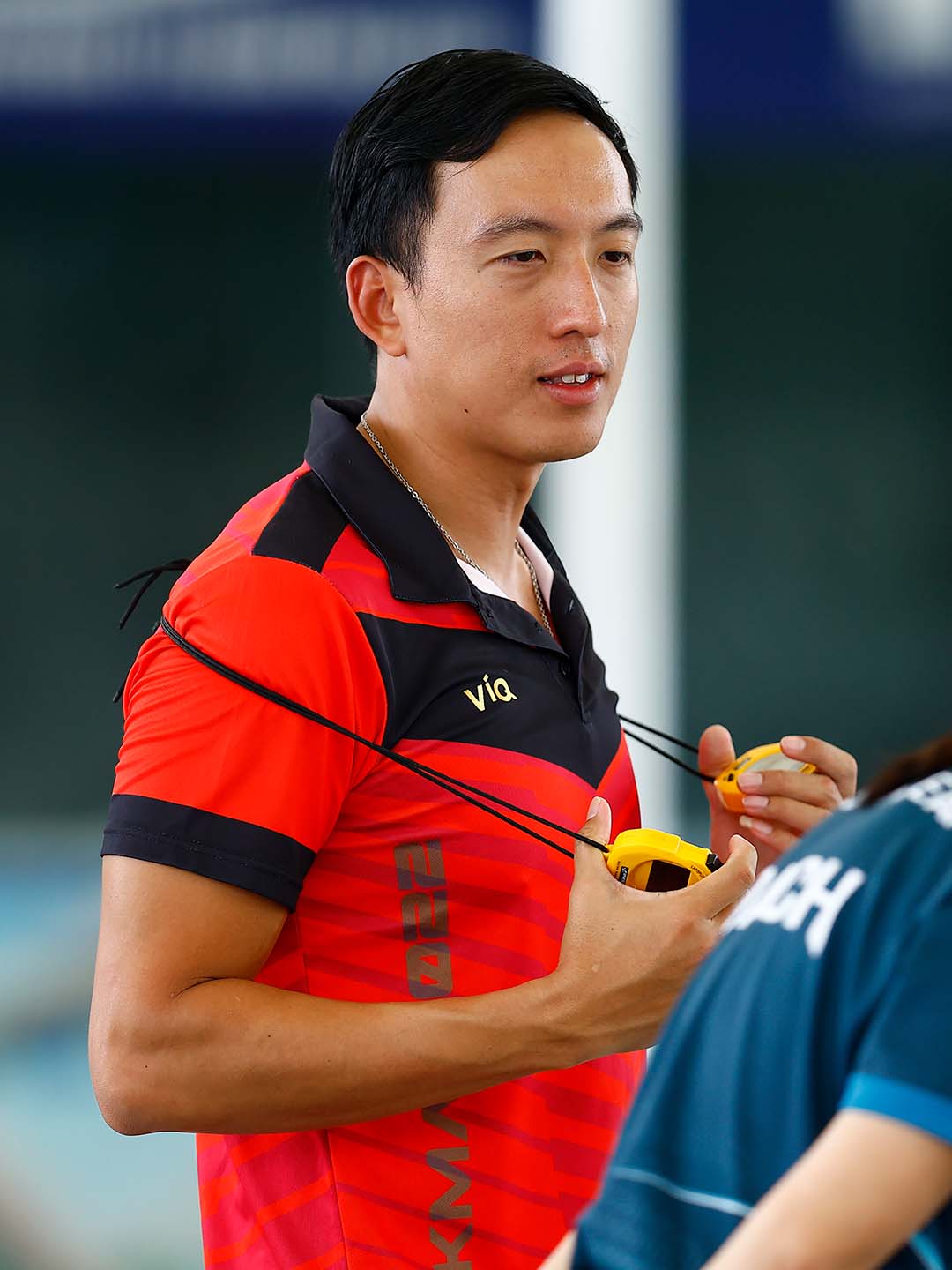
What turned the swim around wasn't in the water — it was a conversation on deck. “Afterwards coach Kevin reached out to me and gave me some guidance on what I did wrong during the swim and what I could change, and then I asked coach YY about this too, and she taught me how to do what coach Kevin was telling me to.”
Lane 1 brought its own psychological weight. “After the warm up before finals I was completely stressed because I was in lane 1, and usually no one in lane 1 gets a medal, so I felt like I really had to lock it in for this swim. And during the swim I was really stressed because the guy beside me in lane 2 was in front of me by a lot, which made me think, if lane 2 is in front of me by so much, that means the other inner lanes are way ahead and I'm dead last — and I just felt the need to chase him, at least to not end up last.”
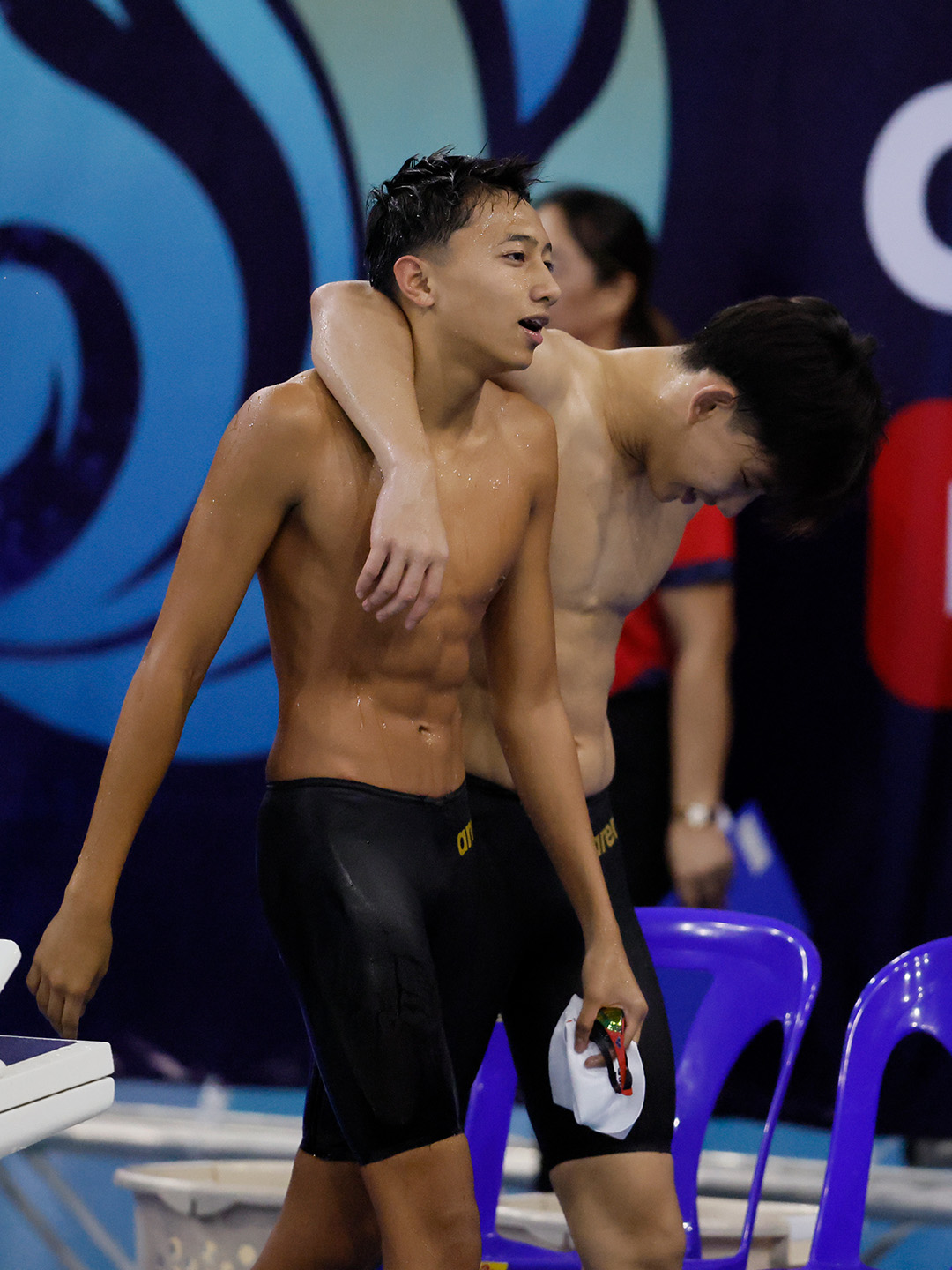
“Unexpectedly, he got second and I got third — which surprised me, because I was just aiming to not get last,” he says. “After the swim I hugged him and thanked him for helping me set the pace and get me third on accident.”
A First AAG With Zero Expectations
None of this was supposed to happen, at least not by Koo Shyann's own account going in. This was his first ever international competition and his first AAG. He arrived straight off a SUKMA training camp with no real expectations of the meet itself. “My coach told me, swim bad nevermind lah, just go and have fun and make new friends. So I came here to purely have fun and make friends with zero expectations of making it to finals nor getting a single medal.”
“I feel like my hard work has finally paid off in an event that I wasn't expecting it to, and I feel proud of myself for being able to be one of the first few swimmers from Perak to be able to get a medal in an international meet.”
The Coach Behind Him
Credit for the foundation runs to Kevin Yeap, Perak's head coach — and no stranger to the podium himself. Yeap is a retired Malaysian SEA Games swimmer with his own set of accolades: gold in the 10km open water event at the 2017 SEA Games in Kuala Lumpur, gold in the 400m freestyle at the 2011 SEA Games in Indonesia, and silver in the 4x200m freestyle relay in 2015. He also represented Malaysia at the 2010 Commonwealth Games before retiring from competition to coach.
“Definitely coach Kevin for helping me build a strong foundation to swim everything and not focusing on one or two events, so I don't have a mainstroke and have multiple events to swim,” Koo Shyann says of the coaching behind his four-medal, four-stroke haul.
What's Next
The next target is the SEA Age Groups, though Koo Shyann is realistic about the meet after that. “I'm looking forward to compete in the following SEA Age Group since I already got a few medals in AAG and I can go there to meet the few new friends I made during AAG. But then for SUKMA 2028, that isn't something that I am focusing on because in 2028 I'm only 16 years old going up against 21-year-old grown ups, so it would be a miracle to be able to get a medal in SUKMA 2028.”
In the meantime, there's no meet on the calendar until Sports Excel Grand Finals in September — and Koo Shyann won't be there. “My focus for the next few months is probably to swim SEA Age Group and to build my fitness and aerobic capacity back up, as I'm not competing in the Sports Excel Grand Finals in September, and I have my final exams coming up, so I would definitely use that time to study and revise all the classes I missed for all the competitions.”
Behind Every Swim
Discipline, in Koo Shyann's telling, started long before Bangkok. “My parents were very strict about my diet and my rest, discipline etc, especially my dad, because he had always wanted the best for me. But as I am still a teenager, even if I know it's good for me, in the end I still end up rebelling and not following their rules.”
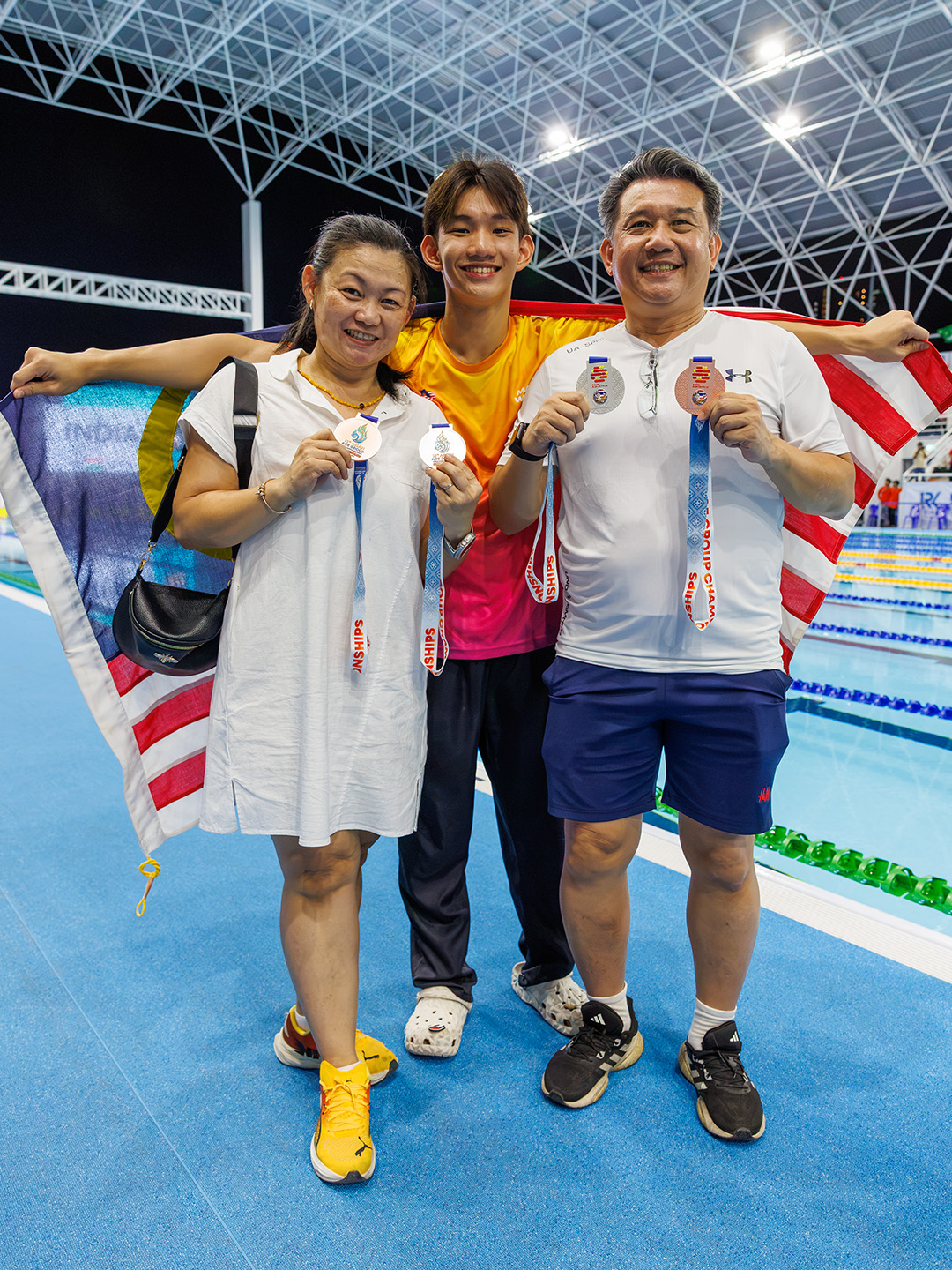
His parents flew to Thailand to watch every swim, and Koo Shyann is clear on what that meant to him. “I think when I compete on such a high level, I know my parents worry and care for me a lot — and this means as much to them as it does to me.”