At 16, Ashton Low Cheok Fung took the loss to Italy as a lesson, found his nerve against Russia, and helped Malaysia claw back an 11–10 win they nearly let slip. A conversation about scorelines, distance, and staying Malaysian from a pool in Singapore.
World Aquatics Men's U16 Championships 2026, Zagreb, 3–9 August
Malaysia's group stage at the World Aquatics Men's U16 Championships opened against Italy, Russia, and Hungary — three of the most decorated nations in the sport. The scorelines were what you'd expect on paper: 23–1, then heavier still. What wasn't expected, at least not by the 16-year-old scoring in all three of those losses, was how little the gap surprised him once he was actually in the water.
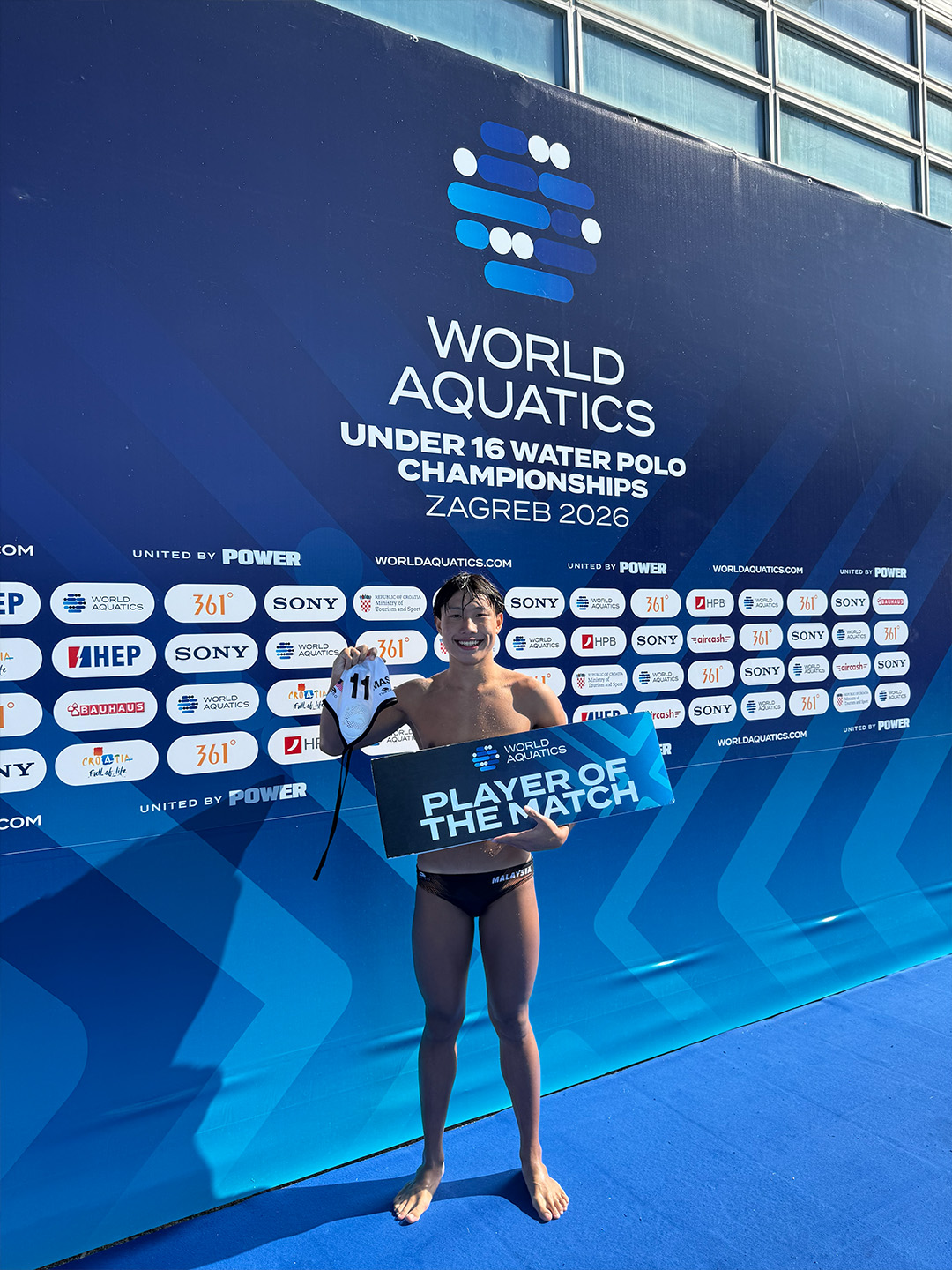
Ashton after being awarded Player of the Match - World Aquatics World U16 Championships Water Polo
Ashton Low Cheok Fung moved from Kuala Lumpur to Singapore at the end of 2024, trading a training programme split with swimming for one built almost entirely around water polo. Eight months later in Zagreb, he scored against Italy, Russia, and Hungary in defeats that ran double digits, went scoreless in a must-win game against Peru, and then top-scored with five goals as Malaysia held off Uruguay 11–10 after nearly surrendering a match they were expected to win comfortably.
"I had nothing to lose. I was there to learn, and part of that is to put all that I have practiced into action." — on scoring against Italy in a 23–1 loss
Q: Going in, did you know scorelines like that were likely, or did the gap still surprise you once you were in the water?
A: The score gap was not surprising at all. Generally, in fact, it might have turned out better than we thought.
Q: You scored in all three of those games despite the results. What did it take to find those chances against defences that dominant?
A: Mainly I was just confident enough to attempt. It really came quite naturally. I had nothing to lose — I was there to learn, and part of that is to put all that I have practiced into action.
Q: How do you reset mentally between a 23–1 loss and the next match on the schedule?
A: The scoreline against Italy was our first match against such a dominant team in the sport. I took it as a learning opportunity to discover what works and what does not, so as to ensure that I can give my best in the following matches.
Q: The Peru loss was the one game you didn't score in. What was different about that match for you personally?
A: It was not the best day for me in terms of my body condition. Moreover, Peru was a game where the stakes were high — the match could determine our placing bracket. I believe I was also mentally under-prepared for the pressure.
Q: Mexico was close throughout before slipping away. Do you remember where the game turned?
A: I wouldn't say it was that close, but I remember it was the last quarter where we had a bit of a rally. Malaysia had a couple of turnovers which led to Mexico scoring first, and that's where the scoreline really pulled apart.
Q: Puerto Rico sounds like the one match that actually felt like your team's level. What made it click that day?
A: Puerto Rico was definitely one of the closer teams in the tournament to our standard. We really just played like usual, following our coach's strategies and enforcing all the practices we've done together in training. Almost everyone on the team managed to score a goal, and I believe it was a special moment for a lot of us — to secure our first win, and for some of my teammates, their first international goal.
Q: Walk me through the Uruguay game — an "easy" match turns into you being down late. What was the mood when you realised this could slip away?
A: It was grim. Our hearts were all tied in a knot. Our coach was also frantically doing what he could to keep us on track, but the mistakes kept coming in. Maybe we were nervous, maybe we underestimated our opponents — but what matters is we stuck to it and gave it our all to take the lead back.
Q: Five goals in one game is a huge individual performance. Was there a specific turning point, for you or for the team?
A: Really, it was just the last quarter, where we managed to secure the equalizer. The chase gave us hope, and that determination carried on until the very last goal.
Q: Winning 11–10 after nearly losing a game you were expected to win comfortably — does that stick with you more than a routine win would?
A: A win is a win. But Uruguay was a good opportunity for us to experience the pressure of a close match and to fortify our teamwork amidst challenging situations.
Q: Across the whole championship, which game are you proudest of — not necessarily the one you scored most in, but the one that meant the most?
A: I think both my goal against Italy and my penalty against Russia were equally proud-worthy. Italy, because I fought hard and persisted. And the penalty against Russia, because I had the guts to dunk the keeper — something I knew would work, something I'd been practicing in training sessions.
"We always knew they were far beyond our level of play, but it wasn't until we experienced these matches that we really, really understood our shortcomings — and learnt from it." — on facing Italy, Russia, and Hungary
Q: What did playing against that level of competition teach you that you couldn't have learned any other way?
A: We always knew they were far beyond our level of play, but it wasn't until we experienced these matches that we really, really understood our shortcomings and learnt from it.
Q: You moved from KL to Singapore at the end of 2024. What's training like there compared to what you had in KL?
A: I believe the biggest change when I went to Singapore was the emphasis I put on this sport. I trained more on water polo than I did in Malaysia, where I prioritised my swimming practices. Singapore also opened my mind to different playstyles, which really got me curious about how the best players I know there perform the way they do. From that, I frequently asked my coach questions and began to discover more about the skills I sought to obtain and the direction of play I was interested in achieving.
Q: How do you stay connected to the Malaysia programme and your national teammates while based outside the country?
A: Mainly camps and tournaments, but also training with some of the teammates from KL and Selangor I know of, during the holidays.
Q: Was representing Malaysia ever in question once you moved, or was that always the plan regardless of where you were based?
A: That is and has always been the plan. As long as my nation welcomes my participation, and as long as I remain a citizen of my country, I believe it is right to do so — and that there is a certain pride to represent Malaysia.
Q: At 16, going into a World Championship against sides like Italy and Russia — did Singapore's system prepare you differently than staying in KL might have?
A: While it's hard to pinpoint whether continuing my training in Malaysia and KL would have resulted in a similar performance, I can say with certainty that Singapore's intensity of play, my proactiveness to specifically prepare to go against larger-built players, and all the exposure I've received there contributed to my level of readiness during the tournament.
Q: You didn't play SUKMA this year, even though it came after Zagreb. What was behind that?
A: I had academic commitments to pursue.
Q: What's next for you after Zagreb — is there a specific target you're building toward?
A: I hope to return playing for Malaysia for the upcoming SEA Age, as well as the following U18 World Championships if Malaysia meets the qualification. SEA Games and Asian Games are a bit of a far-fetched goal, but it's definitely on my list for the next few years — along with SUKMA, if it were to occur for water polo again.
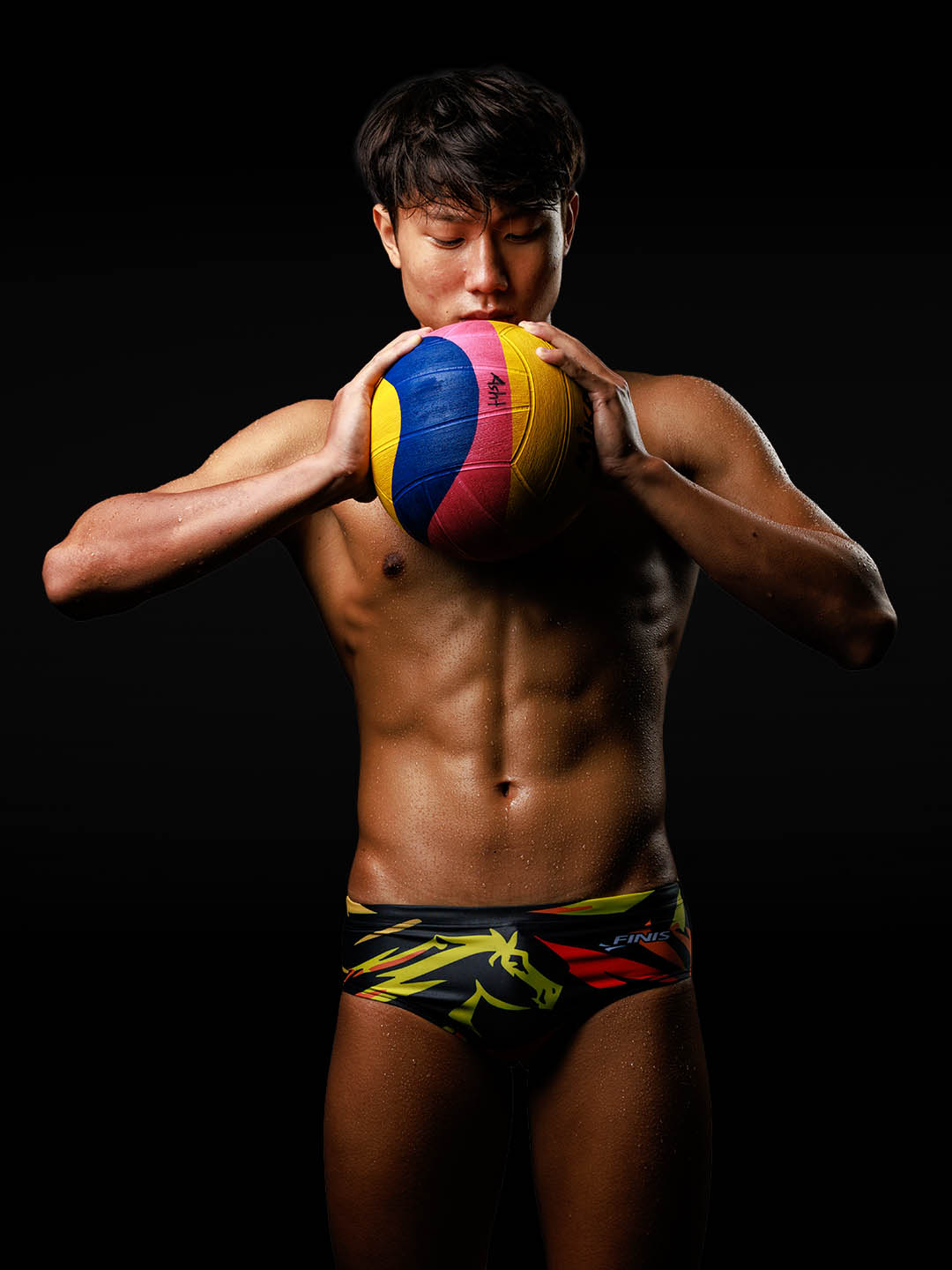
Ashton Low Cheok Fung before competition in Zagreb, August 2026.