Less Volume, More Gold - How a 15 year old achieved a 50M Fly Gold at SUKMA 2026
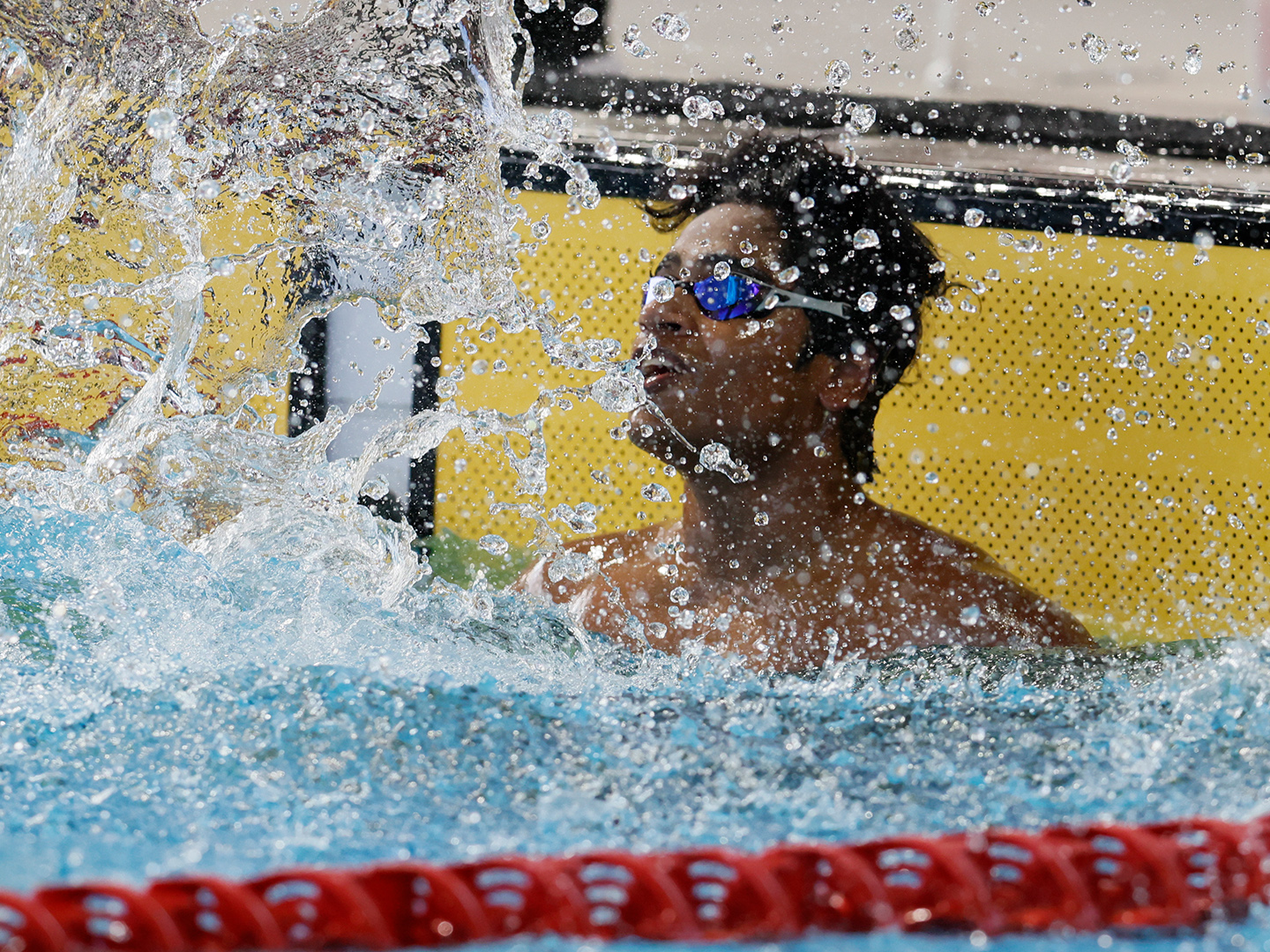
Nishan Christopher Manuel trains five days a week — lighter than almost everyone he raced against. At his first SUKMA, it produced a gold medal in the 50m butterfly.
Nishan Christopher Manuel trains five days a week — lighter than almost everyone he raced against. At his first SUKMA, it produced a gold medal in the 50m butterfly.
Event: Men's 50m Butterfly · Result: Gold · Time: 25.06 · Contingent: Wilayah Persekutuan · Age: 16 · Coach: Cindy Ong
Nishan Christopher Manuel swims five days a week — Monday to Thursday, plus Sunday mornings — built around four one-hour group sessions and a 30-minute one-to-one on Tuesdays, supplemented by gym work three times a week and, unusually, bouldering. It's a lighter load than most of the swimmers he lines up against. At SUKMA XXII, his first Games, it produced a gold medal in the men's 50m butterfly, dropping from a 25.40 prelim to a winning 25.06 in the final.
The low-volume programme isn't a recent adjustment — it's simply what has always worked. "It worked for me from the start so we saw no need to change it," Nishan said. Alongside the five days in the pool and three gym sessions a week, climbing has quietly become part of the plan. "Bouldering/climbing has also contributed to giving me better relative body weight strength which directly helped my swimming."
He doesn't frame the approach as something he's had to defend. "I think it has been an advantage as it has allowed me to avoid burnout and give me enough time to recover properly whilst also producing results," he said. "It may not work for everyone, but it works for me. I never really had to defend it to anyone."
His coach, Cindy Ong, sets the baseline deliberately, not by default. "Because it has been enough," she said. "I've never believed in adding sessions just to make the training week look more impressive. If four focused sessions are producing adaptation, allowing proper recovery and the swimmer is still progressing, I don't see a reason to chase volume for its own sake."

Ong has coached Nishan since he was eight years old — and by her account, the decision to take him on had as much to do with his mother as with him. "Honestly, at eight, I accepted Nishan because of his mother," she said. "She was the kind of swim parent every coach hopes for; supportive but never pushy, interested enough to learn, and willing to trust the coaching process. She took every piece of advice I gave her and understood very early that the parent, coach and athlete have to work as a team. That gave Nishan a very good environment to grow in."
The athlete that environment produced looks different from the boy she started with. "He has grown from a little boy who simply did what I asked into an athlete who understands himself," Ong said. "He knows his stroke, his body and what he needs to race well. There is much more ownership now."
Nishan's own read on the relationship is shorter, but points the same way. "It's great. My swimming has steadily improved the years," he said. "She knows and understands how I feel; under what circumstances I perform well; and she knows what type of training works best for me."
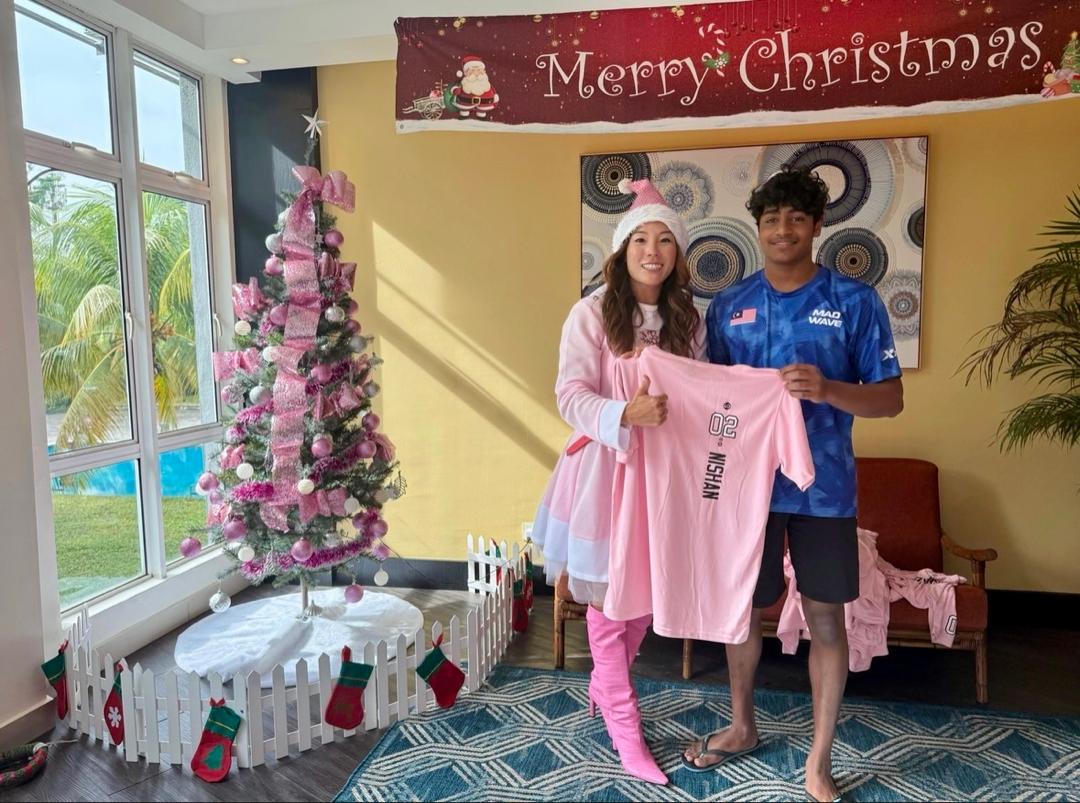
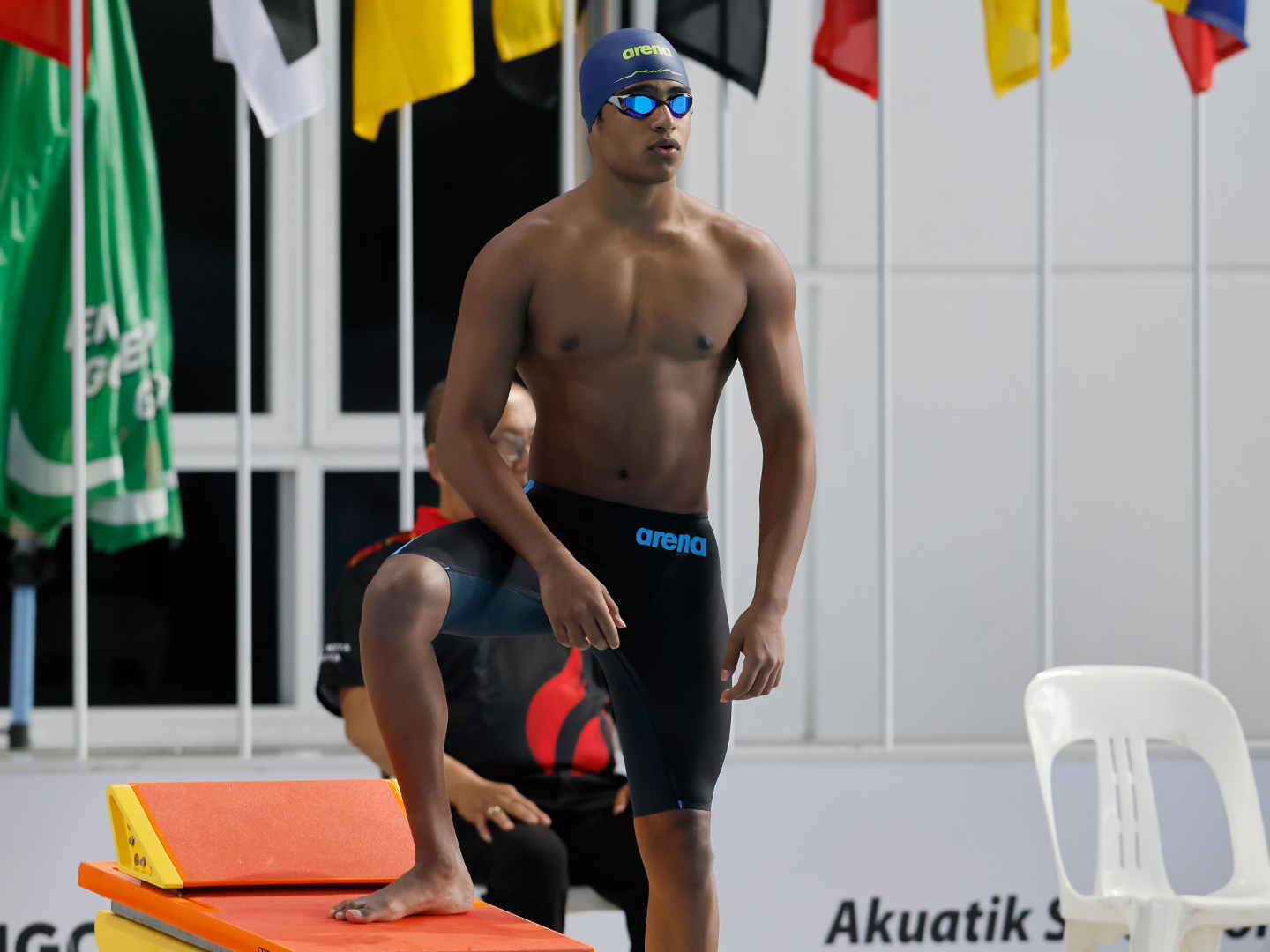
The lead-up to SUKMA looked different from a normal training block — not more, but more targeted. "I had no school as it was summer break so we were able to do 1-1 sessions most mornings instead of the standard group session so we could focus on more specific things," Nishan said. "I was also able to prioritise sleep, focus on my nutrition and overall recovery."
Ong built the block backwards from the demands of a 50m fly. "For a 50 fly, I needed him to accelerate quickly, generate maximum speed and then hold as much of that speed as possible," she said. "We moved through dead-start acceleration, max velocity, resisted and assisted speed, speed maintenance and a very hard lactate-producing session. The final part was about sharpening and reducing the load. There wasn't much training, so every session had to count."
The volume question, for her, was never about a fixed number. "It always comes back to purpose. What adaptation am I trying to get from this swimmer? If more volume will help produce it, then we use more. If it only adds fatigue without improving what happens in the race, I don't see the point."
"It worked for me from the start so we saw no need to change it." — Nishan Christopher Manuel, on his training approach
Ong is careful to draw a line between her philosophy and a one-size-fits-all prescription. "The philosophy applies across my programme, but the prescription is individual," she said. "This is also the area I got my PhD in — whether high performance really requires the traditional time commitment we have come to accept in swimming. The answer isn't that everyone should train less. It's that we should be much more deliberate about what we ask athletes to do."
That stance puts her at odds with a sport that has long measured commitment in hours and kilometres — a tension she says she's made peace with. "I'm quite comfortable being questioned. Swimming has traditionally equated commitment with hours and kilometres, whereas I look at whether the athlete is improving and whether the work transfers into racing. Ultimately, the results have to speak for the programme."
Prelim: 25.40 · Final: 25.06 · Result: Gold
The prelim swim didn't go the way he wanted. "My prelim swim was disappointing, but I watched the video of my swim a few times, identified the mistakes I had made, and internalized what I wanted to fix/change for my final swim," he said. The stakes of the final weren't lost on him. "When it was time for me to swim finals I was extremely nervous as it was my first SUKMA and also my first time having a chance to win gold at a meet like this."
Whatever the nerves, the training block showed up immediately. "Despite my late start, in the first few strokes I had already felt that the training block leading up to SUKMA had worked really well as my strokes felt stronger and more powerful than before," he said. The numbers backed up the feeling: two breaths instead of his usual three, twenty strokes instead of twenty-one, and — watching the video back — a final 15 metres substantially faster than the one that produced his previous personal best at the Malaysia Open.
The biggest surprise wasn't the start or the middle of the race. "The thing that surprised me the most was how good my closing speed was," he said. "My swim and my tempo usually starts to fall apart towards the end but I held it together much better this time."
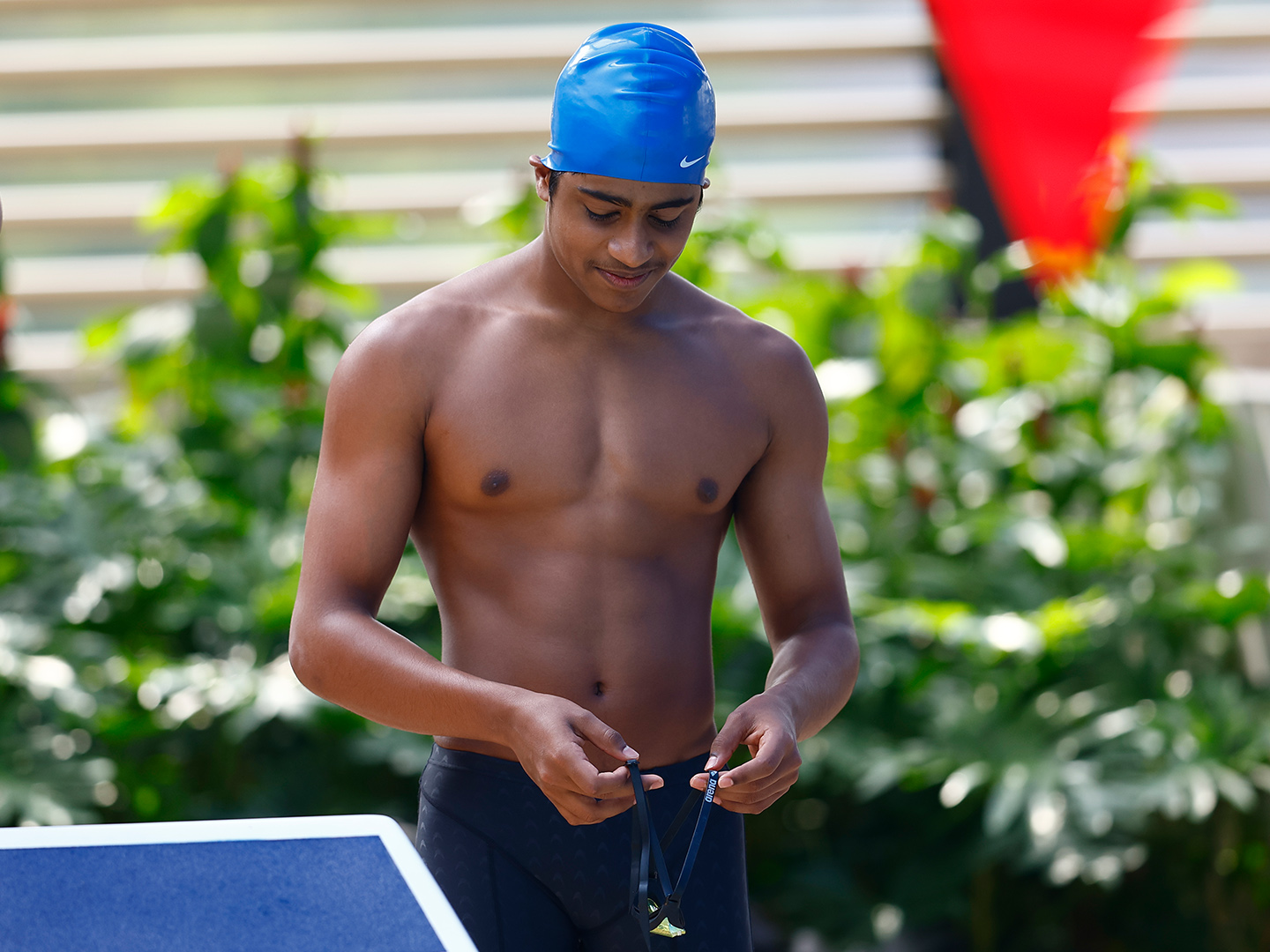
Asked whether training this way has shaped how he thinks about the sport long-term — sustainability, avoiding burnout — his answer was a simple yes. He's also thought about what he'd tell a younger swimmer being pushed toward higher volume. "When a swimmer is young I would agree in the sense that more volume would be good to develop technical skills, movement coordination and comfort in the water, but more isn't necessarily better," he said. "They should train with intent and specificity as skill development depends heavily on quality, repetition and a variety of movements, not simply accumulating more hours and distance."
With SUKMA behind him, the focus is already shifting. "I'm going to start putting more time into training for the 100s rather than just the 50s as I feel like it will help me develop my back-end speed and also help me develop and build my strokes."
For Ong, the gold wasn't proof that less training works in general — it was proof that specificity does. "It validated that specificity matters," she said. "There was no opportunity to hide behind volume. We had to identify exactly what he needed for that race, train it, recover from it and trust the process. He delivered when it mattered."
She's wary of the result being read as a shortcut. "I wouldn't want anyone to look at Nishan and conclude that swimmers should simply train less," she said. "I'd rather they ask a different question: what is this set, this session or this extra kilometre actually meant to achieve? More is only better when there is a reason for more."