Open Water Goes Indoors for a Malaysian First
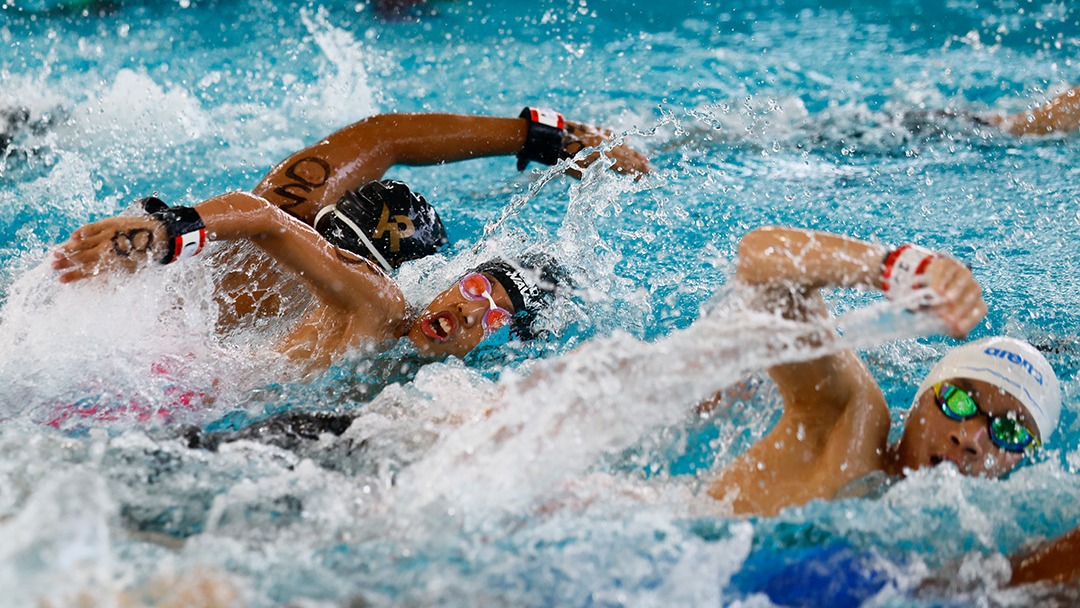
No sea, no waves and not even fish! The first competitive Pool Open Water Swimming event gives swimmers a different way to race and a chance to try something beyond their usual pool lanes.
No sea, no waves and not even fish! The first competitive Pool Open Water Swimming event gives swimmers a different way to race and a chance to try something beyond their usual pool lanes.
By Amalina Agusalim
Open water swimming in an indoor pool may sound like a contradiction. For 15-year-old Bryston Lee, it certainly did. "Open Water Swimming? In an indoor pool?" was his first reaction when he learned that a new competition at the 2nd MILO East Meets West Invitational Swimming Championships would be held in one. He had never tried anything like it, and neither had many of the other swimmers.
On 9 November, Akuatik Kuala Lumpur organised Malaysia's first competitive Pool Open Water Swimming (Pool OWS) event, bringing together 63 participants aged 10 to their 40s at the National Aquatic Centre, Bukit Jalil. Pool OWS itself wasn't entirely new in Malaysia. Malaysia Aquatics conducted limited-invitation time trials in 2025, and similar setups had been used for race simulations. However, this was the first time it was held as a competition.
For Akuatik Kuala Lumpur Bakat Wilayah Coach Angelia Ong, the idea was simple: to give swimmers a chance to experience open water-style racing before taking on the real thing. "It is a good way for pool swimmers to transition to an open water competitive environment. For experienced swimmers, it is a good race simulation and keeps their skills honed as part of the training cycle before heading out to open water," she explained.
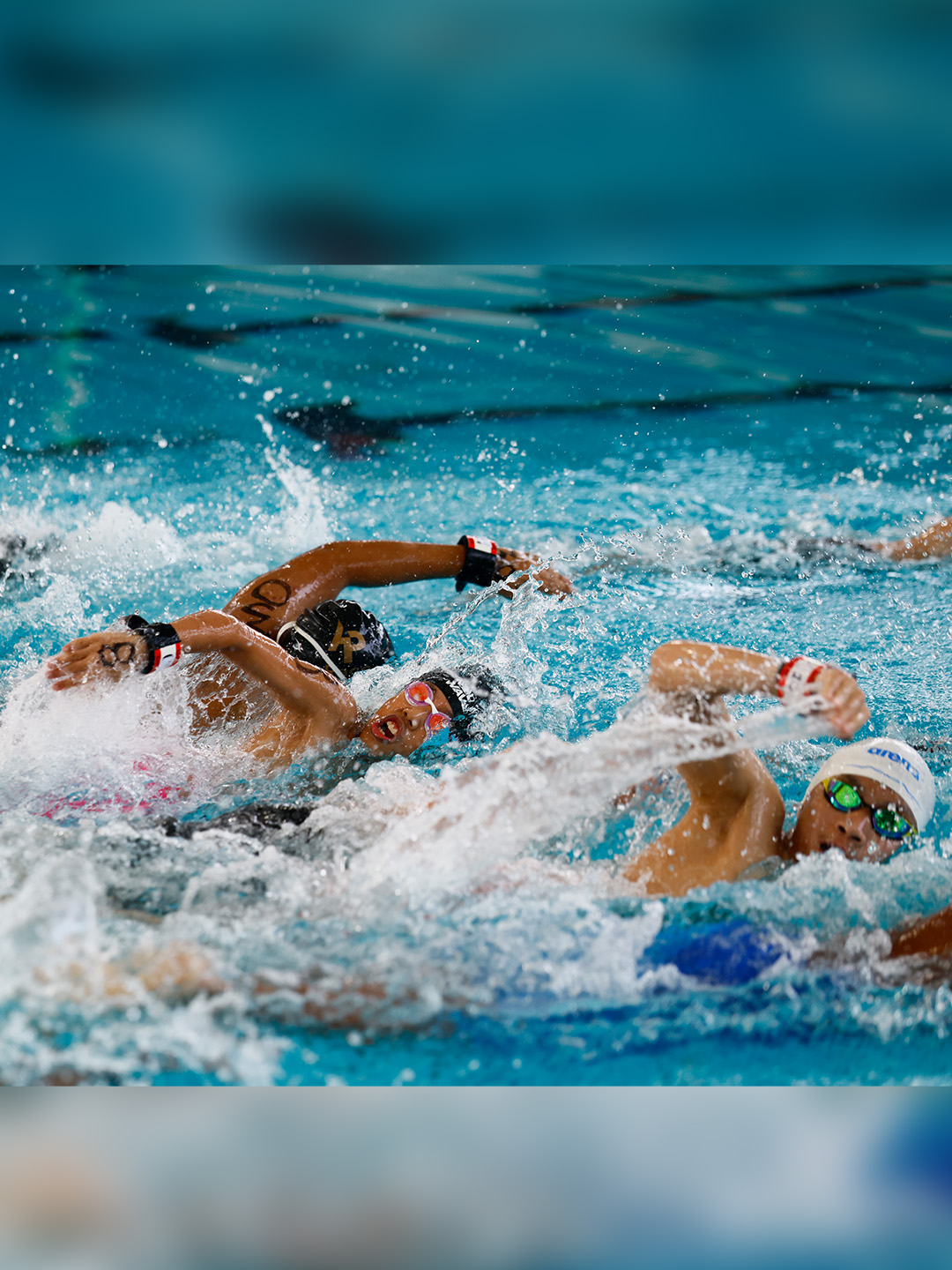
Instead of swimming in designated lanes, swimmers navigated a circuit marked by three turning buoys, completing 13 loops of approximately 109 metres each, covering roughly 1.5km. The course was designed around the indoor pool's dimensions, with consideration given to turning space, visibility and the timing system. While the controlled environment eliminated waves, currents and weather, it also introduced a different emphasis on race strategy.
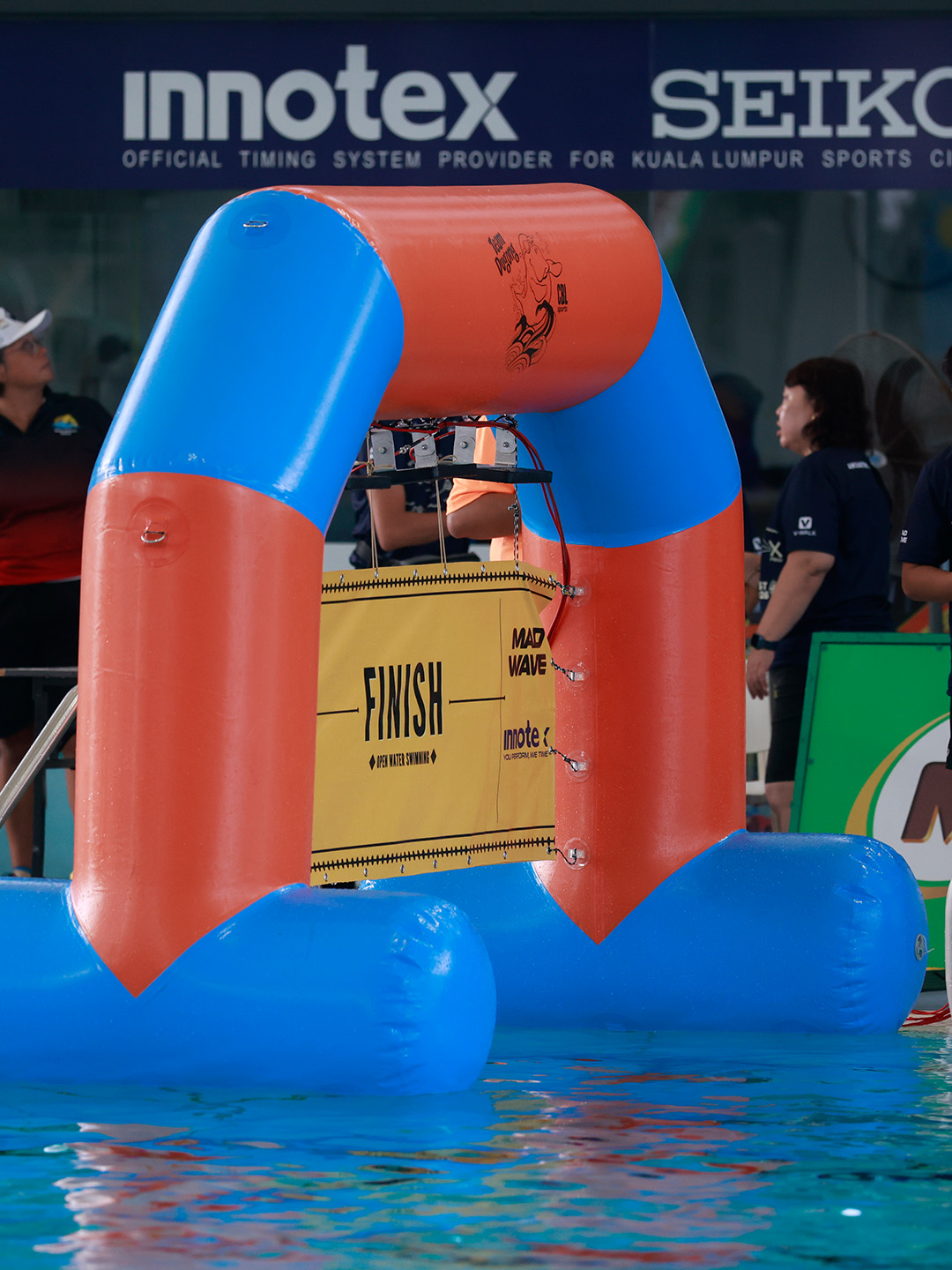
"In the pool, the water is flat and clear, the temperature is controlled and the wall is never far away," Angelia further explained. The pool version lets swimmers focus on the racing side, which is pacing, positioning, turning at buoys and racing in a group, before they deal with the environment. Unlike conventional pool swimming, where lane ropes separate the competitors, Pool OWS requires swimmers to negotiate turns and manage their positions within a group.
Bryston, who won the Boys' 14–15 Category, clocking 18:01, discovered that calmer water did not necessarily mean an easier race. "Although I didn't have to deal with waves or currents, the race still required a lot of focus, endurance and good race strategy," he said. "Indoor open water swimming was somewhere in between a normal pool race and swimming in the sea. It required us to adapt."
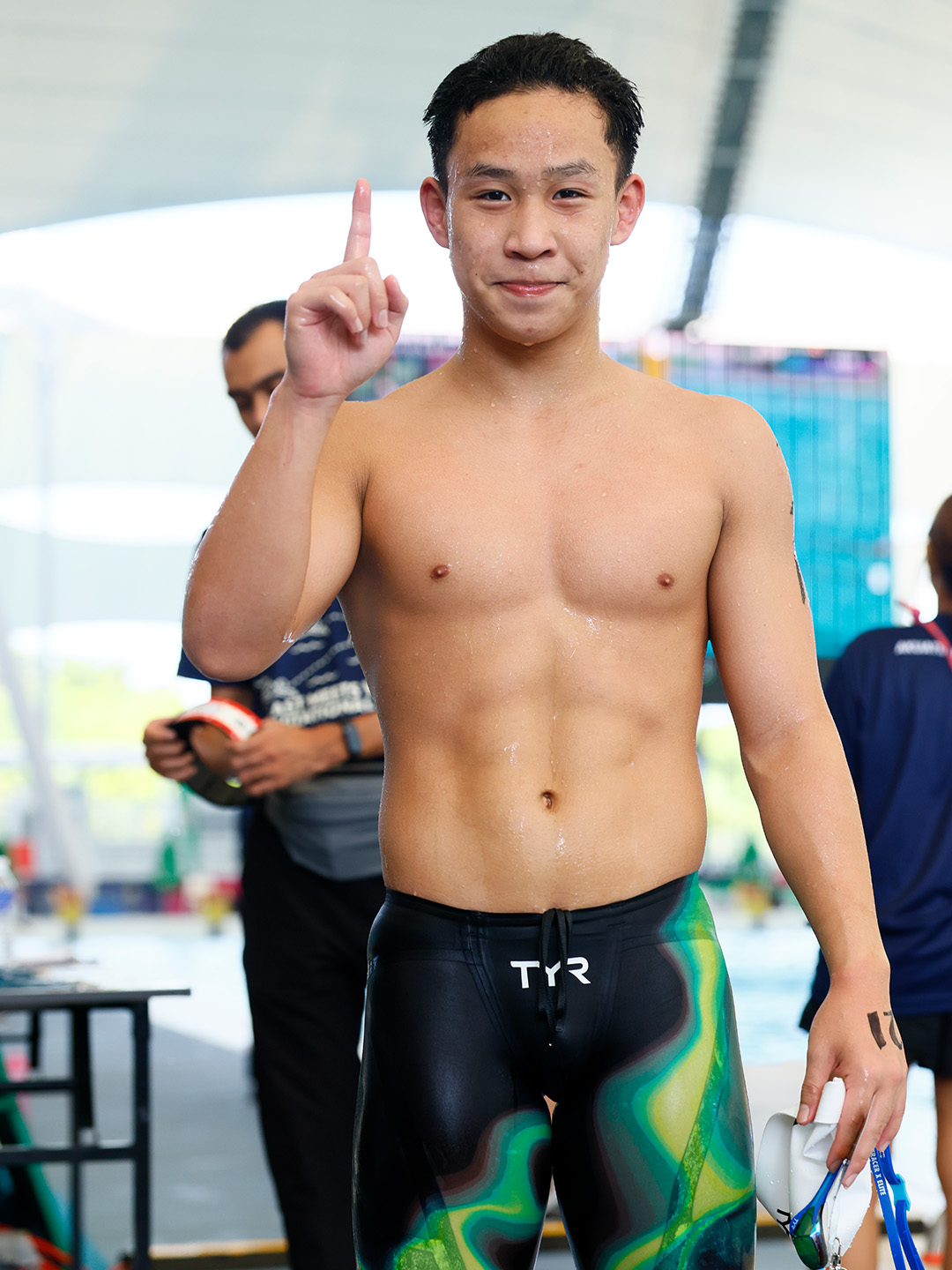
His victory came ahead of Azfar Qayyum, who clocked 20:07, and Jaydon Goh, who touched the finish in 20:27. Despite finishing outside his seed time, Bryston was satisfied with the experience. "I'm quite satisfied with my performance. There are still areas where I can improve, but every competition gives me something new to learn from," he said.
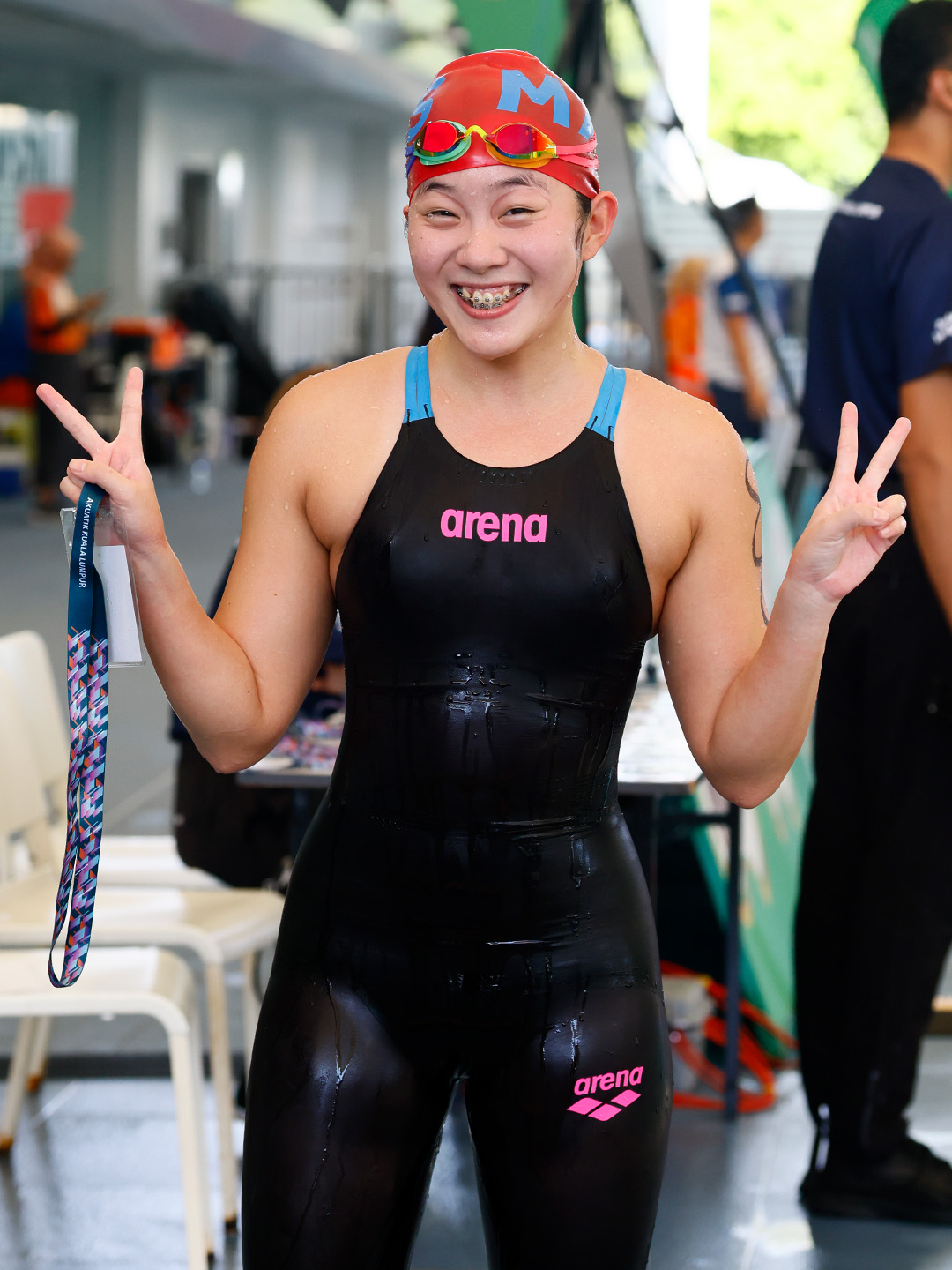
For experienced open water swimmer Magdalene Ing, the most noticeable difference was everything that was missing. "It was quite different because there were no waves, currents, direct sunlight or even fishes," said the 20-year-old athlete. "In outdoor open water competitions, we constantly adapt to the natural environment, whereas the indoor setting felt more predictable."
However, that predictability did not eliminate the physical demands of the distance. "The hardest part was maintaining my pace and making sure I stayed consistent until the finish."
Magdalene won the Girls' 16–60 Category in 21:15, ahead of compatriot Cheah Jia Ying. "Honestly, I wasn't expecting to win, so I was happy with the result," she explained.
In the older boys' category, Harith Aiman Adha took victory in 19:20, admitting the race was more challenging than expected. "Although there were no waves or currents, it still required endurance, strategy and focus," said the 18-year-old. "The challenge was maintaining our pace, managing the turns and staying focused throughout." He viewed the race as an opportunity to assess his progress rather than simply celebrate the result. "I'm happy with my performance. There are things I can improve, but I gave my best effort and gained valuable experience."
If the individual races tested endurance, the Mixed 4x500m relay produced the day's closest race. Six teams, each comprising two male and two female swimmers, brought together swimmers of different ages and abilities, adding teamwork and race positioning to an already unfamiliar challenge.
The Team A quartet of Cheah Jia Ying, Sarah Humairah, Adam Amsyar and Harith Aiman Adha claimed victory in 33:32. Just 0.01 second behind was the Team E quartet of Muhd Fighree Iqbal, Ethan Kyle, Diana Daniella Ahmad and anchor Magdalene, who touched the finish in 33:33.
With Harith Aiman and Magdalene swimming the final legs for their respective teams, the finish provided an exciting conclusion to the competition. Harith recalled the importance of conserving energy while chasing another swimmer. He jumped into the water with the team in second position. "I knew I was chasing someone (Magdalene Ing), so I tried not to overspend my energy and conserve it for the last turn," he explained. "I focused on maintaining my pace and staying strong until the end."
Magdalene's approach was equally straightforward. "My strategy was simply to give it my all, maintain my effort and do my best for the team."
The Team F quartet of Adeline Tan, Nur Arissa Damia, Ahmad Zaayed and anchor Bryston Lee completed the podium in 34:37.
Beyond the results, the significance of this Pool OWS lies in its potential to bridge the two disciplines.

For Angelia, the competition was never just about trying something new. She sees Pool OWS as a way to introduce more Malaysian swimmers to open water racing, especially those who have spent most of their time competing in traditional pool events. The skills are not quite the same. "Pool swimmers can try OWS, coaches can see who has the aptitude, and a wider group of athletes can build a base for open water racing."
She also hopes the format will encourage more swimmers to compete in both pool and open water events, rather than seeing them as separate paths. The learning wasn't limited to the athletes. Officials and organisers also gained experience with buoy marshalling, lap counting, call-room procedures and other aspects of running an open water-style race. There were challenges, particularly in adapting the course to an indoor setting, but Angelia felt the response was encouraging.

"It was a good first step. Swimmers from 10 to their 40s took part, many for the first time, and it showed there is real interest." She hopes Pool OWS can eventually become a regular competition, either as part of an existing meet or as a standalone event.
The swimmers seemed keen on the idea too. Bryston said he would recommend it to others because it helps develop race awareness, confidence and adaptability. Harith Aiman felt younger swimmers in particular could benefit from trying a format that tests both endurance and strategy.
As for Magdalene, who is already familiar with racing outdoors, she would happily do it again. "I really enjoyed this new experience because it was something different from my usual outdoor competitions," she said. "It challenged me to adapt to a new environment, and I would love to experience it again and continue improving myself."
Whether Pool OWS becomes a regular fixture remains to be seen. But its first competitive outing has given swimmers, coaches and officials something to build on.
It won't replace racing in the sea, nor is that the intention. What it can do is make the transition a little less daunting for swimmers who want to give open water a try. And for a first competition, that is a pretty good place to start.
After all, who says you need an ocean to make waves?