The World Records Are Falling; Beijing Has Yet to Begin (Part 1)
A world record lasted 15 days. Another survived almost 7 years. Then the American trials produced six world record performances in four days. With Beijing approaching, the records tell a bigger story than the race to see how many will survive.
By Amalina Agusalim
Part 1 of 2
A world record lasted 15 days. Another survived almost 7 years. Then the American trials produced six world record performances in four days. With Beijing approaching, the records tell a bigger story than the race to see how many will survive.
On 9 October, Pieter Coetze swam 22.09s in Tashkent to become the fastest 50m backstroker in history. He took two hundredths of a second off from Kliment Kolesnikov’s 22.11 which had stood since 2022. But, his 22.09 lasted just 15 days.
On 24 October, Xu Jiayu swam 22.03 at the Chinese short course championships.
It was that kind of month. Egor Kornev tied the five-year-old 100m freestyle world record. Barely three weeks later, Jack Alexy broke it. Tomoyuki Matsushita took nearly half a second off Daiya Seto’s 400m individual medley record. And less than two weeks after Gretchen Walsh set a world record in the 50m freestyle, Kate Douglass beat her by swimming that exact time.
From 28 to 31 October, the US trials in Westmont, Illinois, produced five new world records and tied another. With the short course world championships beginning on 1 December, there’s a good chance some of these swimmers will race each other again.
October’s World Record Book
Date
Event
Swimmer
Time
What happened
2 Oct (World Cup Baku)
Men's 100m freestyle
Egor Kornev
44.84
Equalled Kyle Chalmers' record
9 Oct (World Cup Tashkent)
Men's 50m backstroke
Pieter Coetze
22.09
Broke Kolesnikov's 22.11
10 Oct (World Cup Tashkent)
Men's 50m butterfly
Egor Kornev
21.28
Broke Noe Ponti's 21.32
11 Oct (Japanese Swimming Championships)
Men's 400m individual medley
Tomoyuki Matsushita
3:54.33
Broke Daiya Seto's 3:54.81
16 Oct (UVA Pro Elite SCM World Meet)
Women's 50m freestyle
Gretchen Walsh
22.75
Broke her own 22.83
24 Oct (Chinese Swimming Championships)
Men's 50m backstroke
Xu Jiayu
22.03
Broke Coetze's 22.09 World Record (which lasted only 15 days)
29 Oct (USA World Championships Trials)
Women's 50m freestyle
Kate Douglass
22.75
Equalled Walsh's record
31 Oct (USA World Championships Trials)
Women's 100m freestyle
Kate Douglass
49.64
Broke her own 49.93
29 Oct (USA World Championships Trials)
Women's 50m backstroke
Katharine Berkoff
25.21
Broke Regan Smith's 25.23
29 Oct (USA World Championships Trials)
Men's 100m breaststroke
Van Mathias
55.14
Broke Ilya Shymanovich's 55.28
30 Oct (USA World Championships Trials)
Women's 100m backstroke
Claire Curzan
53.92
Broke Regan Smith's 54.02
31 Oct (USA World Championships Trials)
Men's 100m freestyle
Jack Alexy
44.64
Broke the 44.84 joint world record held by Kornev & Chalmers
15 days at the top!
When Coetze swam 22.09 at the World Cup Tashkent on October 9, he shaved 0.02 seconds from the world record held by Kliment Kolesnikov since 2022.
Pieter Coetze (RSA) in the men's 100m backstroke final at the World Aquatics Championships Singapore 2025. Photo: Clement Chew @ Atlas Media Group.
The achievement reinforced the South African's standing among the leading backstroke swimmers of his generation.
Yet his time at the top of list was remarkably brief.
On 24 October, Xu Jiayu led off the mixed 4×50m medley relay at the Chinese short-course championships in Beijing in 22.03. He was six hundredths faster than Coetze and 0.67 seconds faster than he’d ever swum himself. His previous best, 22.70, dated back to 2018.
Xu was 31 by then, and he’d changed the way he trained. The high-volume programme he’d followed for years had suited him in his teens and twenties, he said. By 30, he was ready to swim fewer metres and put more intensity into the work he kept.
He broke the 50m into three parts and practised each at speed. He worked on the start, the middle of the race and the finish separately, ending the session once fatigue affected the quality of his swimming. In a race with just one turn and barely 22 seconds to get everything right, he wanted to practise those parts at the speed he’d need on race day.
Eight years after his previous best, Xu swam his fastest 50m under a programme built around shorter, sharper efforts. If he and Coetze meet at the world championships, Coetze will get his chance to answer in the same pool where Xu took his record.
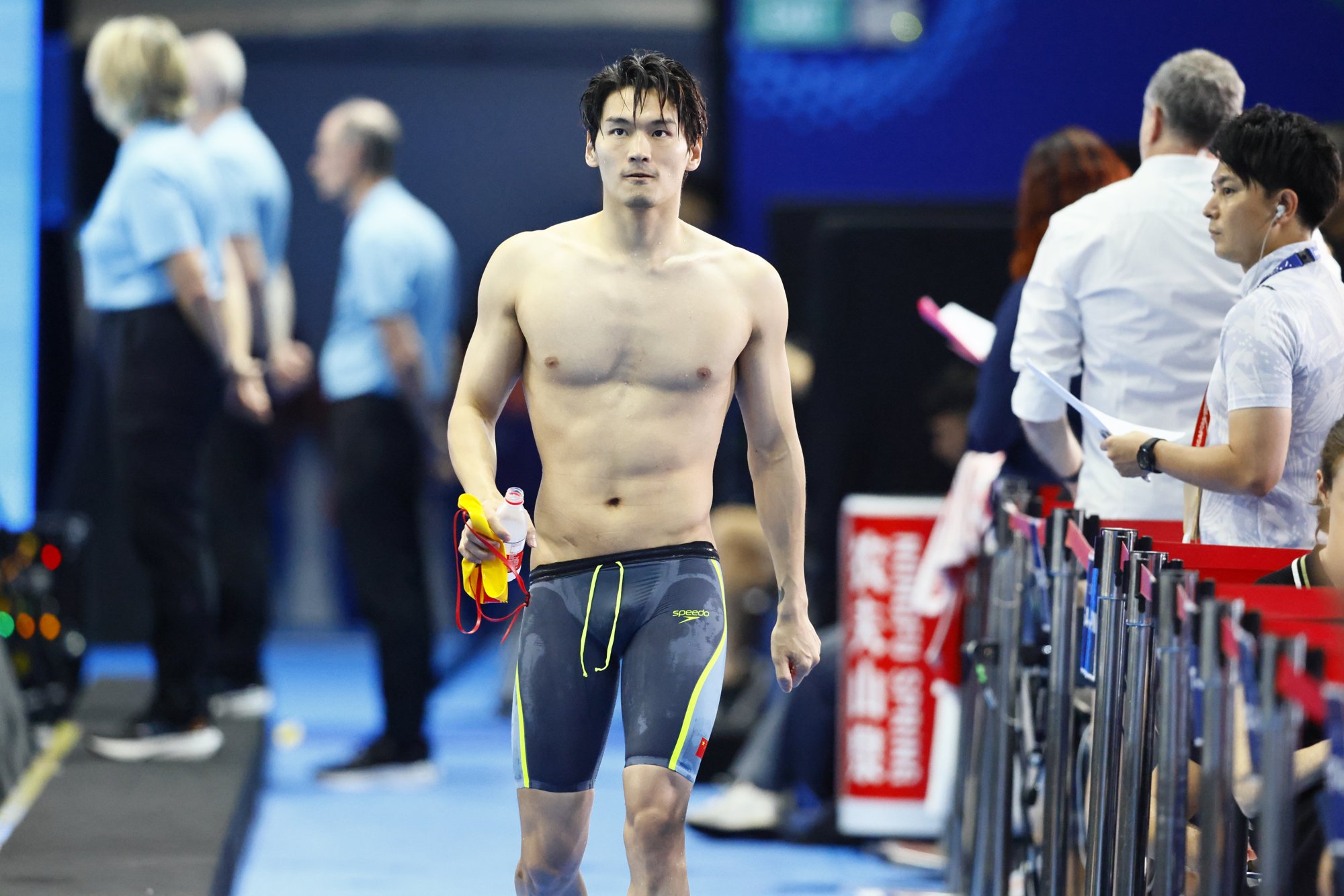
Xu Jiayu (CHN) at the World Aquatics Championships Singapore 2025. Photo: Clement Chew @ Atlas Media Group.
Matsushita is Finally a World Record Holder
For nearly 7 years, Daiya Seto’s world record of 3:54.81 in the men’s 400m IM had remained untouched.
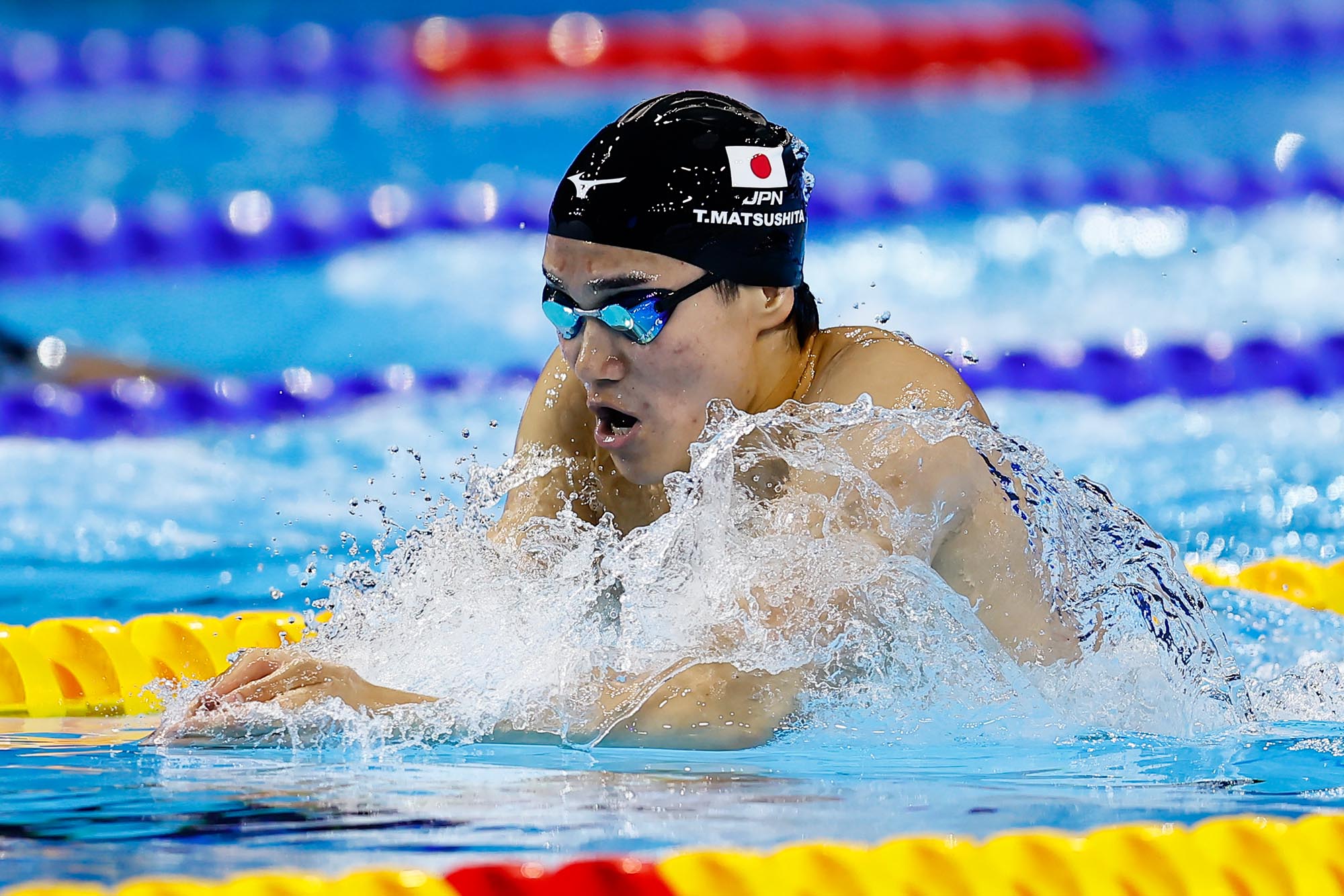
Tomoyuki Matsushita (JPN) in the men's 400m individual medley final. Photo: Clement Chew @ Atlas Media Group.
On 11 October, 21-year-old Tomoyuki Matsushita clocked 3:54.33 at the Japanese Short Course Championships, shaving 0.48s off his Japanese compatriot’s record set in 2019.
What made this world record swim memorable was how Matsushita achieved it. Halfway through the race, he was still 2.21 s behind Seto’s world record pace. At the wall, he was 0.48s faster.
The 400m IM is a gruelling event that demands more than speed. Across four strokes and 16 lengths, swimmers must manage their pace carefully. Matsushita's splits tell an interesting story.
Inside the record: Matsushita vs Seto
Stroke
Seto (2019)
Matsushita (2026)
Faster by
Butterfly
52.35
53.22
Seto 0.87s
Backstroke
59.05
1:00.39
Seto 1.34s
Breaststroke
1:06.50
1:05.44
Matsushita 1.06s
Freestyle
56.91
55.28
Matsushita 1.63s
3:54.81
3:54.33
Matsushita 0.48s
Seto was considerably quicker over the first 200m, but Matsushita made up the difference through breaststroke and freestyle.
Seto completed the final 200m of his record swim in 2:03.41. Matsushita covered it in 2:00.72, gaining 2.69 seconds over the second half alone.
His 55.28 freestyle split was particularly impressive after 300m of racing. It showed that he still had enough speed left when fatigue would normally become a major factor.
Already an Olympic silver medallist at Paris 2024 and the 2025 Singapore World Championships, Matsushita has now added a world record to his credentials.
With Leon Marchand named in France's Beijing squad, a possible meeting in the 400m individual medley would make the event even more interesting.
For now, Matsushita owns the fastest time in history.
But Beijing will test whether he can reproduce it when the world's best are racing beside him.
The Sprint Crown is Up for Grabs in Beijing
Kyle Chalmers' 44.84s World Record has stood as the benchmark in the men's short-course 100m freestyle. Almost 5 years later, within the space of 28 days, two swimmers changed the conversation.
First came Egor Kornev.
At the World Cup Baku on October 2, the 22-year-old Russian matched Chalmers' 2021 world record, becoming only the second man to swim 44.84. The Australian no longer had the record to himself.
Eight days later, Kornev added another record to his name. His 21.28 in the 50m butterfly at Tashkent took 0.04 seconds off the world record set by Noe Ponti at the 2024 World Short Course Championships in Budapest.
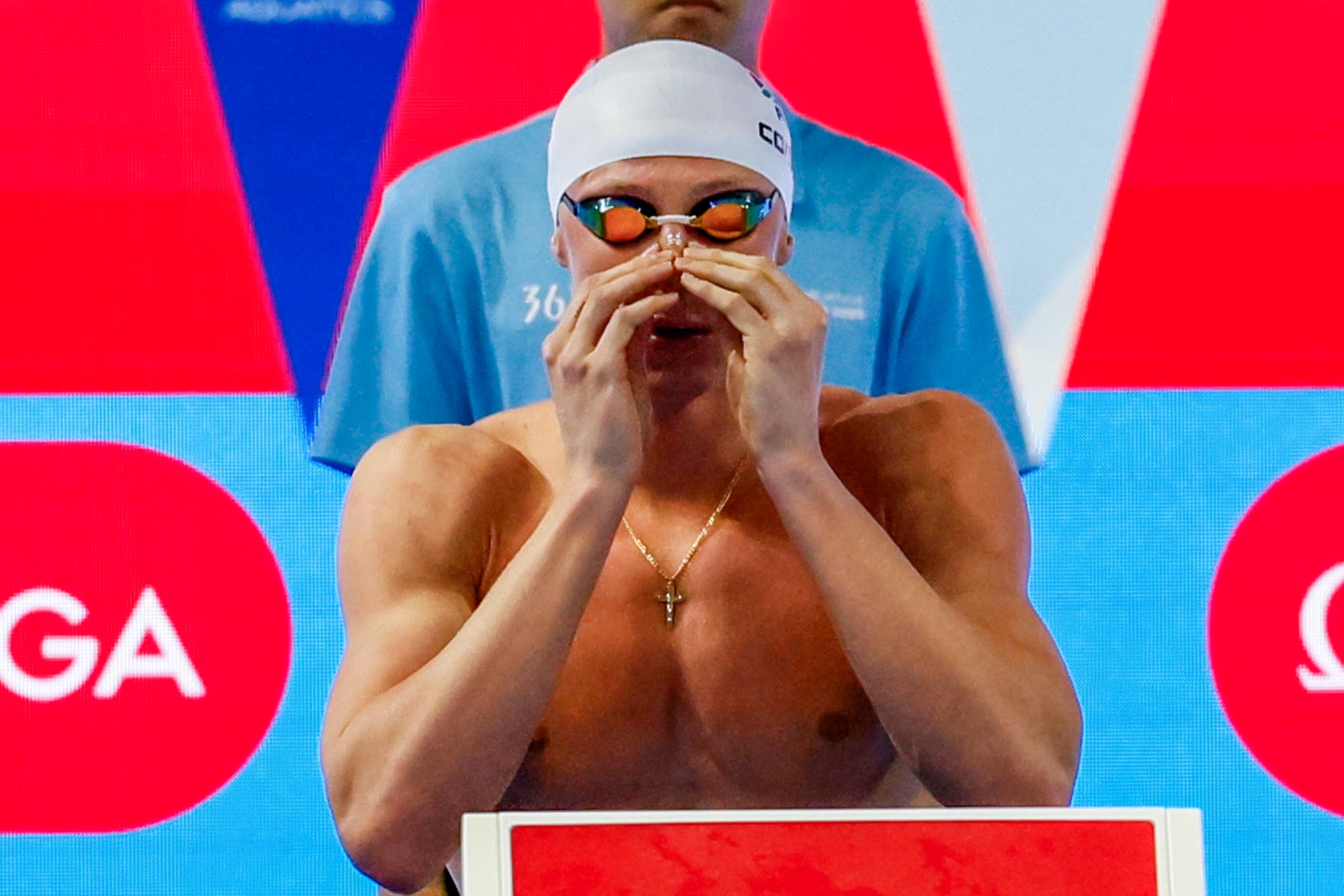
Egor Kornev in the men's 100m freestyle. Photo: Clement Chew @ Atlas Media Group.
What made Kornev's performances particularly interesting was his ability to produce record-breaking speed across two different strokes.
The 50m butterfly leaves almost no room for error. One poor turn or a slight loss of rhythm can cost a swimmer the race. The 100m freestyle presents a different challenge: maintaining speed over four lengths while managing three turns and the fatigue that builds towards the finish.
Kornev had shown he could handle both, and within eight days of each other.
For a few weeks, he was the talk of the town.
Then Jack Alexy entered the picture.
Part 2 follows the story to the US trials in Westmont.